

Living with POTS: How a Functional Medicine Approach Can Help You Reclaim Your Energy and Quality of Life
You Have Not Been Making It Up
If you’ve been told your test results are normal while your body tells you something is clearly wrong, you’re alone. If you’ve sat in a cardiologist’s office, then a neurologist’s office, then perhaps a gastroenterologist’s office, and left each one with a partial answer or no answer at all, that experience is more common than it should be.
POTS is real. It is measurable. And it’s life-altering in ways that a standard appointment rarely has time to fully appreciate.
At Vibrant Health of Colorado, we hear this story regularly. Patients come to us after years of feeling dismissed, misunderstood, or managed rather than truly helped. They’re not looking for another medication to layer on top of the ones that are already only partially working. They’re looking for someone who will take the time to actually look. That’s exactly what we do.
What Is POTS, and Why Is It So Difficult to Diagnose?
Postural Orthostatic Tachycardia Syndrome, or POTS, is a form of dysautonomia, a dysfunction of the autonomic nervous system. The autonomic nervous system controls the involuntary processes that keep us functioning: heart rate, blood pressure, digestion, temperature regulation, and circulation. When it’s working properly, you never have to think about any of these things. When it’s not, the effects ripple across nearly every system in the body.
In a person with POTS, the transition from lying down to standing triggers an abnormal spike in heart rate, typically 30 or more beats per minute, without a corresponding drop in blood pressure. The body essentially fails to regulate circulation in response to gravity. The result is a cascade of symptoms that can feel completely disconnected from one another.
POTS is a syndrome, not a single disease. It presents differently in every person, which is part of why diagnosis is so often delayed. It disproportionately affects women, particularly those between the ages of 15 and 50.
Common Symptoms of POTS
Because POTS touches so many body systems at once, its symptoms are often mistaken for anxiety, chronic fatigue syndrome, or simply stress. The most frequently reported include:
- Rapid heart rate or palpitations upon standing
- Lightheadedness, dizziness, or near-fainting
- Persistent fatigue and exercise intolerance
- Brain fog and difficulty concentrating
- Nausea, bloating, and digestive irregularities
- Anxiety, tremors, and difficulty regulating body temperature
- Poor sleep and post-exertional crashes
The challenge for patients is that these symptoms rarely point a single specialist toward a single diagnosis. Each one gets managed in isolation. No one connects the dots. That is a structural problem with the way conventional medicine approaches complex, multi-system conditions.
Why Conventional Medicine Often Falls Short with POTS
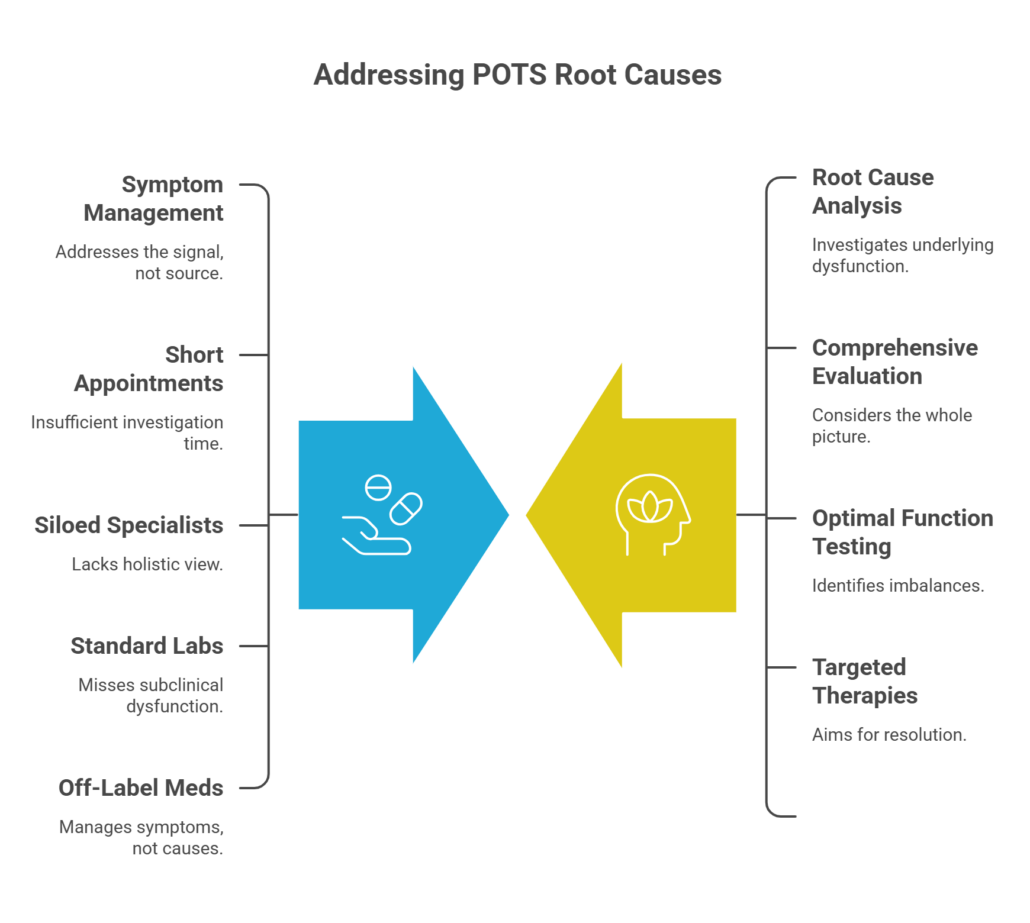
Standard POTS care has real value, and we want to be clear about that. Increased sodium and fluid intake, compression garments, and medications like beta-blockers or fludrocortisone can offer meaningful symptom relief. We don’t dismiss these tools, and we use them when appropriate.
The limitation is that they address the signal, not the source. They ask the body to compensate rather than asking why the body stopped regulating properly in the first place.
Several structural realities make conventional care insufficient for most POTS patients:
- Appointment time is too short: A 15-minute visit does not allow for the depth of conversation or investigation that POTS requires.
- Specialists work in silos: A cardiologist focuses on heart rate. A neurologist focuses on nerve signaling. A gastroenterologist focuses on digestion. No one is responsible for the whole picture.
- Standard labs miss subclinical dysfunction: A result that falls within the normal range is not the same as a result that reflects optimal function. Conventional testing was designed to rule out disease, not identify the imbalances driving chronic symptoms.
- There is no FDA-approved medication for POTS: All pharmaceutical treatments are prescribed off-label for symptom management, not for resolution of underlying causes.
If you’ve been through this system and come out the other side still struggling, you have not failed. The model has simply not been equipped to give you what you actually need.
What a Functional Medicine Approach to POTS Actually Looks Like
Functional medicine starts with a different question. Instead of asking which medication suppresses this symptom, it asks why this system is dysregulated in the first place.
It treats the body as an interconnected network rather than a collection of separate parts. It takes the time to understand the full picture: health history, lifestyle, environment, nutrition, hormones, gut function, immune status, and more. And it uses advanced testing to find the imbalances that standard panels were never designed to catch.
POTS is rarely a standalone condition. Instead, it’s almost always downstream of something else. Functional medicine works to find that something else, address it directly, and allow the autonomic nervous system to stabilize as the underlying contributors are resolved.
At Vibrant Health of Colorado, this approach does not exist in isolation. We integrate functional medicine with comprehensive primary care, hormone optimization, and gut health support under one roof, in Lone Tree and Eagle, with telehealth access across Colorado. Our patients don’t have to piece together their care across multiple disconnected providers. We coordinate it all.
The Root Causes Behind POTS: What We Investigate
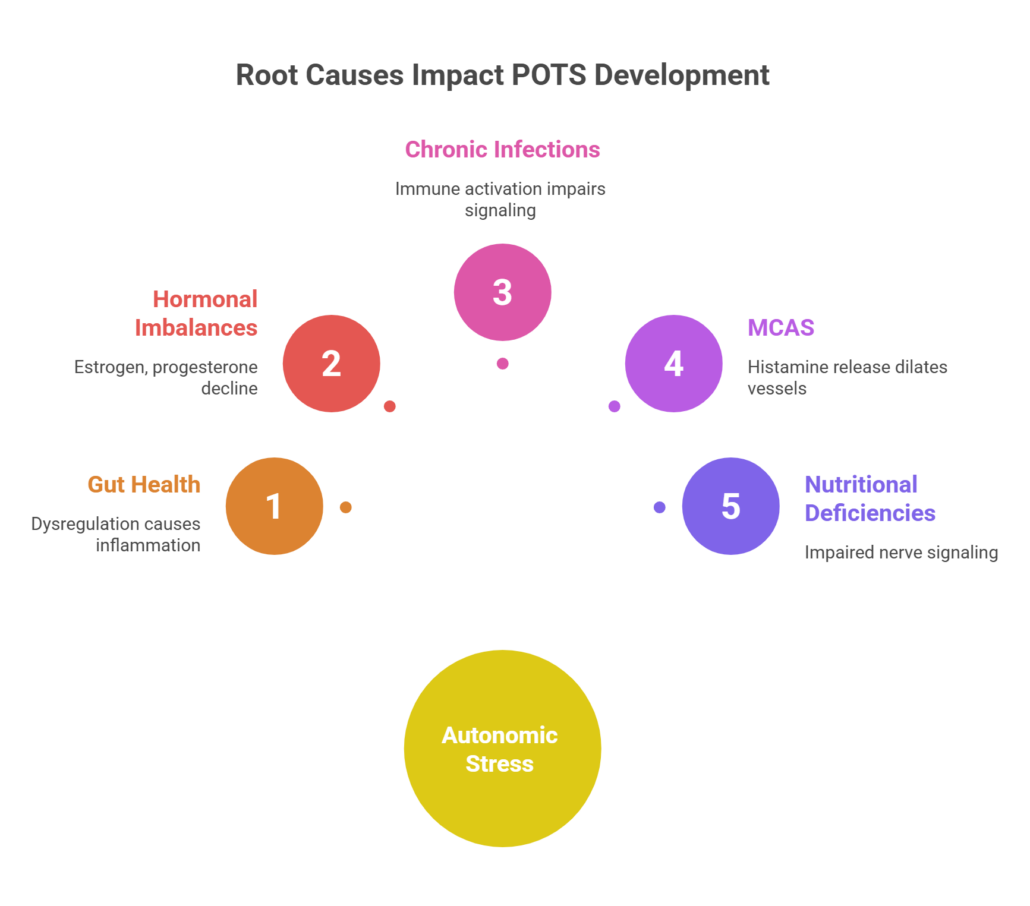
POTS does not appear without reason. It develops when the autonomic nervous system is under enough stress, from enough directions, for long enough, that it loses its ability to self-regulate. Our job is to find out what created that stress.
The root contributors vary from patient to patient, which is why personalized investigation matters so much. The most common underlying factors we evaluate include the following.
Gut Health and the Gut-Brain Axis
The gut microbiome has a direct line of communication with the autonomic nervous system through the gut-brain axis. When the gut is dysregulated, whether through dysbiosis, intestinal permeability, food sensitivities, or Small Intestinal Bacterial Overgrowth (SIBO), it generates systemic inflammation and immune activation that can impair autonomic function. Gut dysfunction also compromises nutrient absorption, creating downstream deficiencies that compound the problem. Restoring gut integrity is often one of the first steps in a meaningful POTS protocol.
Hormonal Imbalances and Adrenal Function
This is one of the most underrecognized contributors to POTS in women, and one of the areas where our clinical experience runs deepest. Estrogen and progesterone directly influence vascular tone and autonomic stability. As progesterone begins to decline, often starting in a woman’s early 40s, many patients notice a sharp increase in palpitations, anxiety, fatigue, and orthostatic symptoms that can look very much like POTS or significantly worsen a pre-existing condition.
Cortisol dysregulation from adrenal dysfunction affects how the body responds to positional changes and physical stress. Thyroid imbalances, even subclinical ones, add another layer of autonomic burden. These hormonal threads are frequently missed in standard workups, and addressing them can produce meaningful improvements in autonomic stability.
Chronic Infections and Post-Viral Syndromes
Many POTS patients can point to an infection that preceded their symptoms. Epstein-Barr virus, Lyme disease, and post-COVID illness are among the most common triggers we see. Persistent immune activation following infection impairs autonomic nerve signaling and can keep the nervous system in a state of chronic dysregulation long after the initial illness has resolved.
Mast Cell Activation Syndrome (MCAS)
MCAS is increasingly recognized as a significant co-occurring condition in POTS patients. When mast cells release excessive histamine, blood vessels dilate inappropriately, triggering the heart rate spikes and circulatory instability that define POTS. MCAS also drives systemic inflammation and sensitizes the nervous system over time. Identifying and addressing MCAS, through targeted nutrition and supplementation, can substantially reduce symptom burden for patients in whom it is a contributing factor.
Nutritional Deficiencies
B vitamins, magnesium, iron, sodium, and vitamin D all play critical roles in nerve signaling, oxygen delivery, and cellular energy production. Deficiencies in these nutrients are common in POTS patients and are frequently missed by standard blood panels that only flag results outside a broad reference range. Functional testing goes further, identifying subclinical deficiencies that, when corrected, can meaningfully reduce fatigue, palpitations, and cognitive symptoms.
Advanced Testing: You Cannot Fix What You Have Not Investigated
One of the most common things we hear from new patients is that they have already had “all the tests.” What they typically mean is that they have had the standard tests. Those tests are valuable, but they were designed to rule out major disease. They were not designed to find the kind of subclinical dysfunction that drives complex chronic conditions like POTS.
Our functional medicine workup goes further. Depending on the patient’s history and presentation, we evaluate:
- Comprehensive hormone panels, including full thyroid function with antibodies and cortisol rhythm testing
- Micronutrient levels assessed at a functional threshold, not just a disease threshold
- Inflammatory and immune markers
- Gut microbiome analysis and intestinal permeability assessment
- Food sensitivity panels
- Screening for infectious triggers where history suggests a post-viral or post-infectious onset
We look at patterns, not just individual numbers. A result that sits at the low end of a normal range may be contributing meaningfully to a patient’s symptoms. We don’t dismiss it because it technically cleared the reference threshold. We ask what it means in the context of everything else we are seeing.
Building a Treatment Plan That Addresses the Root Cause
There is no standard POTS protocol at Vibrant Health, because there are no standard POTS patients. Every plan is built from what the testing and history actually reveal. That said, there are consistent pillars we draw from, combined and weighted based on what each patient needs.
Nutrition as a Foundation
Food is one of the most powerful tools available for stabilizing an overactivated nervous system. We focus on anti-inflammatory dietary approaches that reduce systemic immune burden, blood sugar stabilization to minimize autonomic stress responses, and increased sodium and hydration to support blood volume. For patients with MCAS involvement, identifying and removing histamine triggers can produce rapid improvements in symptom severity.
Targeted Supplementation
Supplementation at Vibrant Health is always based on testing, never on guesswork. Common targets include electrolytes, magnesium for nervous system regulation, B vitamins for energy production, CoQ10 for mitochondrial support, and omega-3 fatty acids for inflammation. Precision matters here. Supplementing without knowing what is actually deficient is not functional medicine.
Hormone and Adrenal Support
Where hormone imbalances are identified, restoration is a priority. Bioidentical hormone therapy, including progesterone, estrogen, and testosterone where appropriate, can produce meaningful improvements in autonomic stability for women with POTS. Adrenal support through nutrition, lifestyle modification, and targeted supplementation helps restore a healthy cortisol rhythm and improves the body’s resilience to physical and postural stress. This is among the most impactful interventions available for women with POTS, and it is an area where our nearly two decades of hormone optimization experience is directly relevant.
Nervous System Regulation
Breathwork, vagal nerve stimulation practices, and intentional parasympathetic activation techniques are not soft add-ons. They produce measurable changes in heart rate variability and autonomic tone. We incorporate these as part of a coordinated plan, giving patients tools they can use consistently between appointments to support their nervous system’s ability to regulate.
Graded Exercise
Exercise is complicated in POTS. Upright activity often worsens symptoms, particularly in the early stages of treatment. Recumbent exercise, including rowing, cycling, and swimming, allows cardiovascular conditioning without the orthostatic challenge of standing. A phased, paced approach builds tolerance gradually and helps patients avoid the crash-and-setback cycle that derails so many well-intentioned attempts to stay active.
Why POTS Requires More Than a One-Time Appointment
POTS is not a condition that resolves after a single visit. Managing it well requires ongoing testing, iterative adjustments, and consistent communication between patient and provider. When one variable changes, often others shift as well. Progress is real, but it’s gradual, and it requires a provider who stays engaged over time.
The traditional healthcare model, even with excellent individual providers, was not built for this. When a cardiologist manages heart rate and a separate provider manages hormones and a third manages gut symptoms, and none of them are in contact with one another, the patient bears the burden of coordinating their own care. That is not a sustainable or effective system for a complex chronic condition.
What POTS patients genuinely need is time, access, and providers and staff who know their full picture. That is not a luxury. It is a clinical necessity.
How Vibrant Health’s Functional Medicine Membership Supports POTS Care
Our Functional Medicine Membership was built precisely for patients who need more than the standard model allows. For those managing complex, ongoing conditions like POTS, the structure of this model is not just convenient. It is clinically meaningful.
Here is what it looks like in practice:
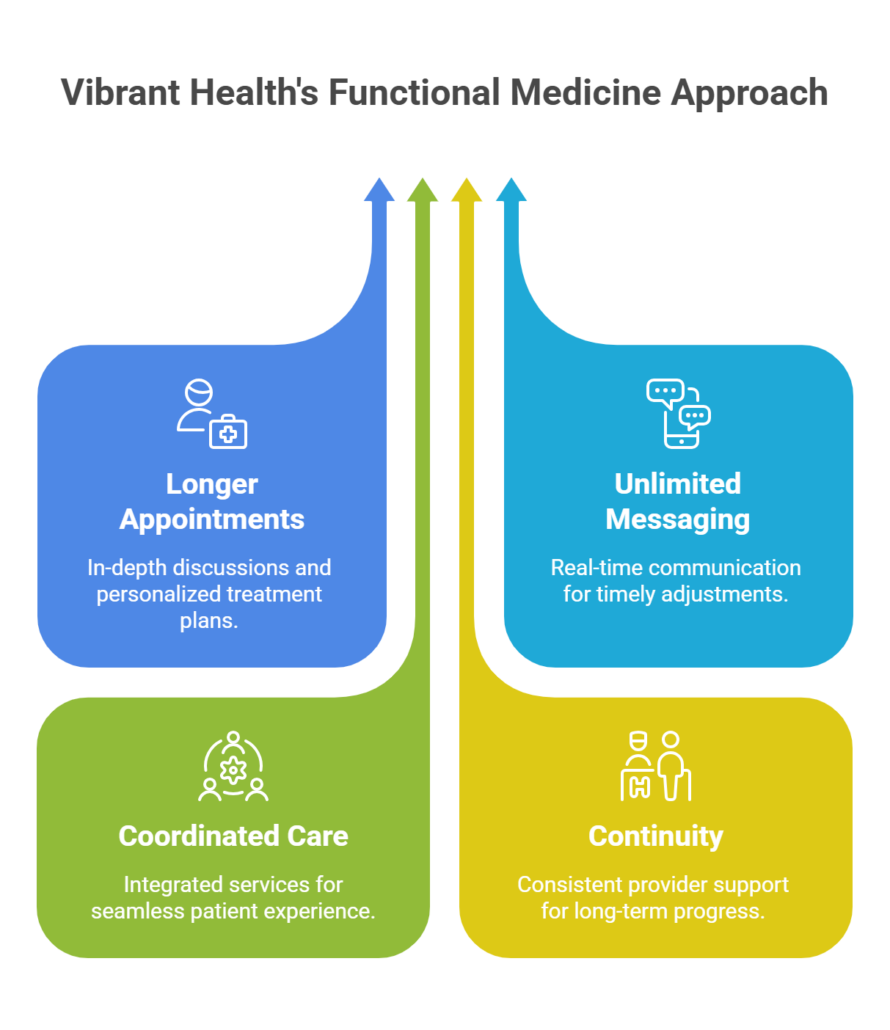
- Longer appointments: Allows us to review full history, interpret complex labs, and build a real plan without rushing
- Unlimited portal messaging: Questions and adjustments happen in real time rather than waiting months for the next available slot
- Coordinated care: Across functional medicine, hormone optimization, gut health, and primary care within a single practice and a single patient record
- Continuity: With a provider who knows the patient’s full picture and tracks progress over time
We serve patients in person at our Lone Tree clinic in the Denver Metro area and our Eagle clinic in the Vail Valley, with telehealth access available to patients throughout Colorado. If you’ve been searching for a functional medicine approach to POTS in Colorado, this is what that care looks like in practice.
You Deserve Answers, Not Just Management
Living with unresolved symptoms is exhausting in a way that goes beyond the physical. When the system tells you repeatedly that nothing is wrong, while your body tells you otherwise, the emotional toll compounds everything else.
We’ve seen patients who’ve spent a decade without clarity find real direction through a thorough, root-cause investigation. Not because we have a formula, but because we actually look. We test more comprehensively, we spend more time, and we connect the dots that fragmented specialist care leaves disconnected.
The goal is not just fewer symptoms, it’s restored function, reclaimed energy, and a quality of life that feels like yours again. That’s what we’re here to help you find.
If you are ready for a different kind of conversation about your health, we’d be glad to have it.
For new patients, schedule a consultation today at our Lone Tree or Eagle office, or connect with us via telehealth from anywhere in Colorado. For more information on our new functional medicine membership options, visit our home page for answers to all your questions.
Frequently Asked Questions About POTS and Functional Medicine
Can functional medicine actually help with POTS, or is it only useful for prevention?
Functional medicine is well-suited to complex, multi-system conditions like POTS precisely because it doesn’t limit itself to symptom management. By investigating the underlying contributors, whether gut dysfunction, hormonal imbalances, nutritional deficiencies, chronic infections, or MCAS, a functional approach can address the reasons the autonomic nervous system became dysregulated in the first place. Many patients who haven’t found adequate relief through conventional care alone have experienced meaningful improvement through a root-cause functional medicine protocol. It is not a quick fix, and it requires commitment, but it offers a path that standard care rarely does.
How is POTS diagnosed, and can Vibrant Health help with that process?
The formal diagnosis of POTS typically requires a tilt-table test, which measures heart rate and blood pressure responses to postural changes and is performed by a cardiologist or neurologist. At Vibrant Health, we work collaboratively with specialists and can help coordinate that diagnostic process. Where a POTS diagnosis is already established, we focus on the functional investigation: identifying the underlying contributors driving a patient’s specific presentation and building a personalized treatment plan from those findings.
Why do so many POTS patients also struggle with hormonal symptoms?
POTS disproportionately affects women, particularly during the years when hormonal fluctuations are most significant. Estrogen and progesterone play a direct role in vascular tone and autonomic regulation. When progesterone declines, as it often does beginning in the early 40s, many women experience a notable increase in palpitations, anxiety, and orthostatic symptoms. Cortisol dysregulation from adrenal stress adds another layer of autonomic burden. These connections are frequently missed in standard care, and addressing them through hormone optimization can be one of the most impactful interventions available for women managing POTS.
What makes Vibrant Health different from other functional medicine practices in Colorado?
Most functional medicine practices focus exclusively on root-cause care and require patients to see a separate provider for primary care needs. At Vibrant Health, functional medicine, hormone optimization, gut health, and primary care are all integrated within one practice. This means your providers are coordinating your care together, not working from separate records or separate conversations. For a condition like POTS, which touches nearly every body system, that coordination is not a convenience, it’s a meaningful clinical advantage.
How long does it take to see improvement with a functional medicine approach to POTS?
There’s no honest universal answer to this question, and we would be cautious of any provider who offered one. Progress depends on what the root causes are, how long they’ve been present, how the patient’s body responds to treatment, and how consistently the plan is followed. That said, many patients begin to notice meaningful improvements in energy, cognitive clarity, and symptom frequency within the first several months of a comprehensive functional medicine protocol. The goal is steady, sustainable progress, not overnight resolution. That’s why continuity of care, and a model that supports ongoing monitoring and adjustment, matters so much for conditions like POTS.

Erynn Gonzales, PA-C is a board-certified, licensed Physician Assistant who is passionate about helping patients achieve their health and lifestyle goals! Erynn has worked in primary care for 14 years and counting. After graduating with a Master’s Degree in Physician Assistant Studies from Midwestern University in 2009, Erynn practiced Internal Medicine and Pediatrics for four years in Phoenix, AZ. During these first few years, she noticed enormous gaps in healthcare and embarked on several years of self-study in ancestral nutrition and natural healing to be able to provide more to her patients, learning how to blend conventional and functional medicine.