

The Root Cause of PMS and PMDD: How Functional Medicine Goes Beyond Symptom Management
You’ve Been Told Your Labs Are Normal. You Still Feel Terrible. Here’s Why.
If you’ve spent years cycling through providers, trying different prescriptions, and still dreading the two weeks before your period, you’re not alone. And, you’re not imagining it!
Many women who come to us at Vibrant Health of Colorado have already done everything they were supposed to do. They’ve tracked their symptoms, may have tried birth control pills or taken antidepressants. They’ve had bloodwork done and have been told everything looks fine. And yet every month, without fail, they feel anxious, exhausted, irritable, or completely unlike themselves, and then the moment their period starts, it lifts.
That pattern is not a coincidence, it’s a biological signal, and “normal” lab results don’t mean nothing is wrong. Standard panels aren’t designed to detect the subtle hormonal and systemic imbalances that drive PMS and PMDD. They’re screening tools, not investigative ones.
What we know from nearly 20 years of clinical work in women’s health is this: PMS and PMDD are real, measurable, and biologically driven conditions. They aren’t a matter of stress tolerance or emotional resilience. Instead, they’re the result of systems that have fallen out of balance, and when you identify what’s actually driving them, you can do something meaningful about it.
That’s what functional medicine makes possible, and it’s what we want to explain in more detail.

PMS and PMDD Aren’t the Same Condition, But They Share the Same Root
Before we talk about root causes, it’s worth being clear about what we’re actually dealing with, because PMS and PMDD are often used interchangeably when they’re not quite the same thing.
PMS (Premenstrual Syndrome): Refers to a cluster of recurring physical and emotional symptoms that appear during the luteal phase of the menstrual cycle, typically in the one to two weeks before menstruation begins. For most women, these symptoms are noticeable and disruptive, but they’re manageable.
PMDD (Premenstrual Dysphoric Disorder): Is a more severe condition. The symptoms are similar in timing but dramatically different in intensity. PMDD involves significant mood disturbances, including depression, anxiety, and irritability that genuinely interfere with work, relationships, and daily functioning. It’s not simply “bad PMS.” It reflects a distinct neurological sensitivity to the hormonal shifts of the luteal phase, which is why women with PMDD can have hormone levels that appear completely normal on standard testing while still being profoundly affected.
Both conditions share common underlying drivers, and that’s the part most conventional care misses.
Emotional and Cognitive Symptoms to Watch For:
- Anxiety, irritability, or sudden mood shifts
- Depression or persistent low mood during the luteal phase
- Brain fog and difficulty concentrating
- Insomnia or disrupted, unrestorative sleep
- Feelings of overwhelm, hopelessness, or loss of control
- Emotional sensitivity that feels disproportionate to circumstances
Physical Symptoms That Often Accompany Them:
- Bloating and digestive changes
- Breast tenderness and headaches
- Fatigue and low energy that doesn’t improve with rest
- Cramping before menstruation begins
- Sugar cravings, appetite fluctuations, and water retention
One important clinical note: if you’ve noticed your PMS worsening as you’ve moved through your late 30s and 40s, that’s not a coincidence either. Progesterone begins declining earlier than most women realize, and this decline accelerates the hormonal volatility that drives luteal phase symptoms, even in women who aren’t yet approaching menopause.
Why Birth Control and Antidepressants Often Don’t Resolve PMS and PMDD
We want to be clear about something before we go further. We’re not anti-conventional medicine. All of our providers and staff at Vibrant Health have traditional medical training, and we use conventional tools when they’re the right tool for the situation. But when it comes to PMS and PMDD, the conventional approach has a consistent and well-documented limitation: it manages symptoms without investigating their cause.
Here’s how the two most common treatments work, and where they fall short:
Oral contraceptives: Suppress ovulation and essentially flatline the hormonal cycle. For some women, this reduces symptoms because the luteal phase fluctuations are eliminated. But it doesn’t address the underlying imbalance. It bypasses it. When the pill is discontinued, the symptoms return, because nothing was resolved.
Serotonin Reuptake Inhibitors (SSRIs): These antidepressants target serotonin reuptake and can meaningfully reduce the mood symptoms associated with PMDD. For some women, that’s an important short-term bridge, but serotonin disruption in the luteal phase isn’t a primary antidepressant deficiency. Instead, it’s often a downstream effect of hormonal imbalance, gut dysfunction, and nutrient deficiency. Treating the downstream effect without addressing what’s upstream means the root cause continues to drive the problem.
What makes this pattern so frustrating is that many women are prescribed these options without any comprehensive hormone panel, gut evaluation, or nutritional assessment having been done. They’re being managed with incomplete information, and that’s not a failure on their part, it’s a gap in the conventional medicine system.
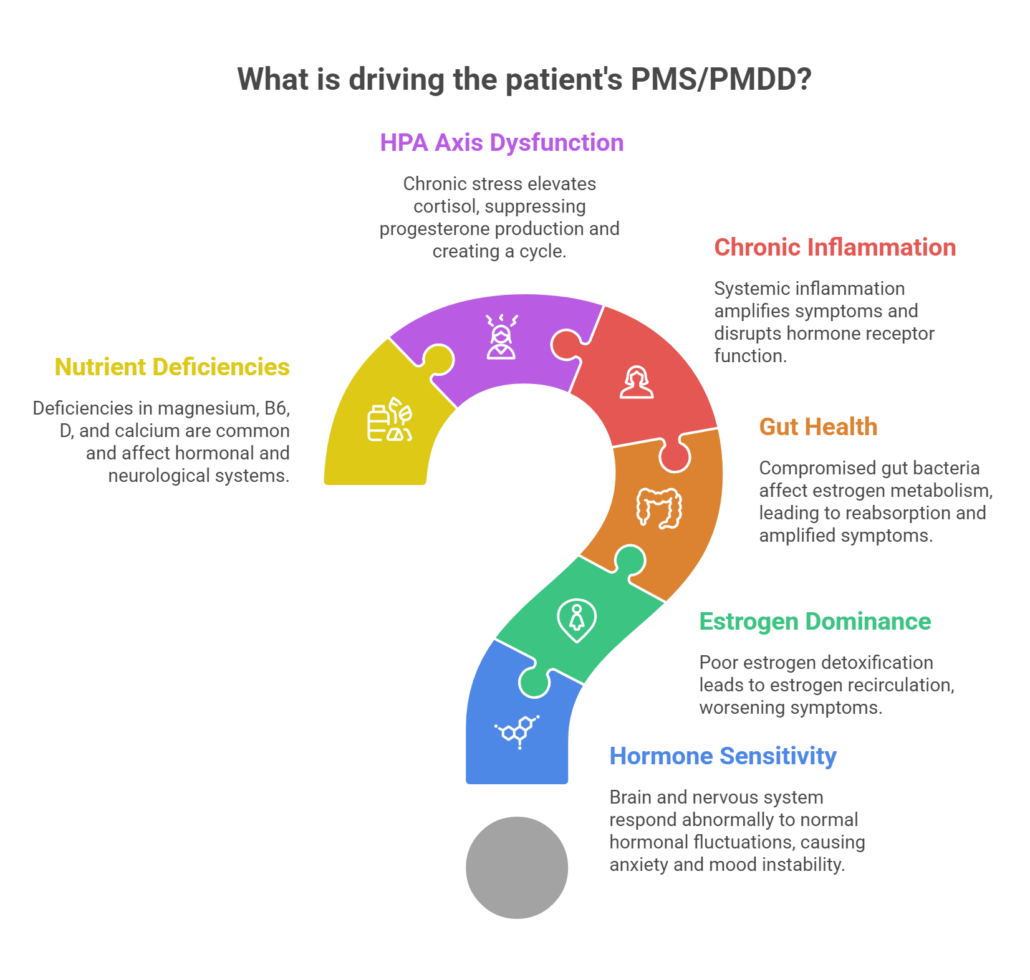
What’s Actually Driving Your PMS and PMDD: A Functional Medicine Framework
This is where functional medicine changes the conversation entirely. PMS and PMDD aren’t single-cause conditions, they’re expressions of multiple interacting systems that have fallen out of balance. Here’s what we’re actually looking for when we investigate these conditions:
Root Cause 1: Hormone Sensitivity, Not Just Hormone Levels
In many cases of PMDD, it’s not that hormone levels are measurably abnormal. It’s that the brain and nervous system are responding abnormally to normal hormonal fluctuations. During the luteal phase, progesterone metabolizes into a compound called allopregnanolone, which typically has a calming effect on the brain through the GABA receptor system. In women with PMDD, this calming effect appears to be reversed, producing anxiety and mood instability instead.
This is why standard labs can come back completely normal while a patient is genuinely struggling. The problem isn’t always the level, it’s the response. Functional medicine maps this sensitivity rather than dismissing it because a number fell within range.
Root Cause 2: Estrogen Dominance and Progesterone Deficiency
The balance between estrogen and progesterone matters as much as their absolute levels. Progesterone decline, which begins in the mid-30s for many women and accelerates toward perimenopause, drives mood instability, heavy cycles, breast tenderness, and sleep disruption. At the same time, poor estrogen detoxification through the liver and gut allows estrogen to recirculate rather than clear properly, compounding the imbalance. This is a key reason PMS tends to worsen with age, even years before menopause officially begins.
Root Cause 3: Gut Health and the Estrobolome
The estrobolome is the collection of gut bacteria specifically responsible for metabolizing and clearing estrogen from the body. When gut health is compromised, estrogen isn’t properly eliminated. It’s reabsorbed, which worsens estrogen dominance and amplifies hormonal symptoms. This is a direct biological link between digestive symptoms like bloating, constipation, and IBS-like patterns and worsening PMS. You can’t fully resolve hormonal imbalance without also addressing what’s happening in the gut.
Root Cause 4: Chronic Inflammation
Systemic inflammation amplifies hormonal symptoms and lowers the threshold for mood and pain sensitivity. It also disrupts hormone receptor function, meaning even adequate hormone levels may not produce the expected effect when inflammation is present. Common drivers include diets high in processed foods and sugar, environmental toxin exposure, and underlying chronic conditions. Inflammation isn’t a separate problem from PMS, in many cases, it’s an active contributor to it.
Root Cause 5: HPA Axis Dysfunction and Cortisol
Chronic stress activates the hypothalamic-pituitary-adrenal axis and elevates cortisol. Cortisol competes with and suppresses progesterone production, which worsens the hormonal imbalance driving PMS symptoms. This creates a reinforcing cycle: stress worsens PMS, worsening PMS creates more stress, and disrupted sleep (itself a common PMS symptom) further dysregulates cortisol. Addressing stress physiology isn’t a lifestyle recommendation we add at the end of a treatment plan, it’s a foundational clinical target.
Root Cause 6: Nutrient Deficiencies
Several specific nutrients play a direct role in the hormonal and neurological systems affected by PMS and PMDD, and deficiencies in these nutrients are both common and measurable:
- Magnesium: Supports muscle relaxation, mood stability, and sleep quality, and deficiency is associated with increased cramping and anxiety.
- Vitamin B6: Essential for serotonin and dopamine synthesis; without it, the neurotransmitter production that buffers luteal phase mood shifts is impaired.
- Vitamin D: Functions as a hormone precursor and influences both mood regulation and immune balance.
- Calcium: has been associated with reduced PMS symptom severity in clinical research.
The above listed deficiencies are rarely tested in a standard PMS workup, which means they’re rarely corrected.
How We Diagnose PMS and PMDD Differently
Understanding root causes is only useful if you actually test for them. Here’s what a functional medicine evaluation for PMS and PMDD looks like from our providers and staff at Vibrant Health, and why it produces a different picture than what most women have experienced.
Our diagnostic approach typically includes:
- Comprehensive hormone panels: Go beyond basic estrogen and progesterone to include cortisol, DHEA, and thyroid function, assessed at the right points in the cycle rather than as a single snapshot
- Gut microbiome and digestive function evaluation: Assess estrobolome health, identify inflammation, and uncover conditions like dysbiosis or SIBO that contribute to estrogen recirculation
- Nutrient deficiency testing: for magnesium, B vitamins, vitamin D, zinc, and other compounds directly involved in hormone metabolism and neurotransmitter production
- Inflammatory marker assessment: To understand whether systemic inflammation is amplifying symptoms
- A thorough clinical history: Covering sleep, stress, diet, digestive patterns, cycle characteristics, and prior treatment responses, gathered during extended appointments designed to surface what a 15-minute visit would never reveal
This is pattern recognition across the full picture, not a reaction to a single data point, and it’s what allows us to build a protocol that’s actually matched to what’s driving your symptoms.
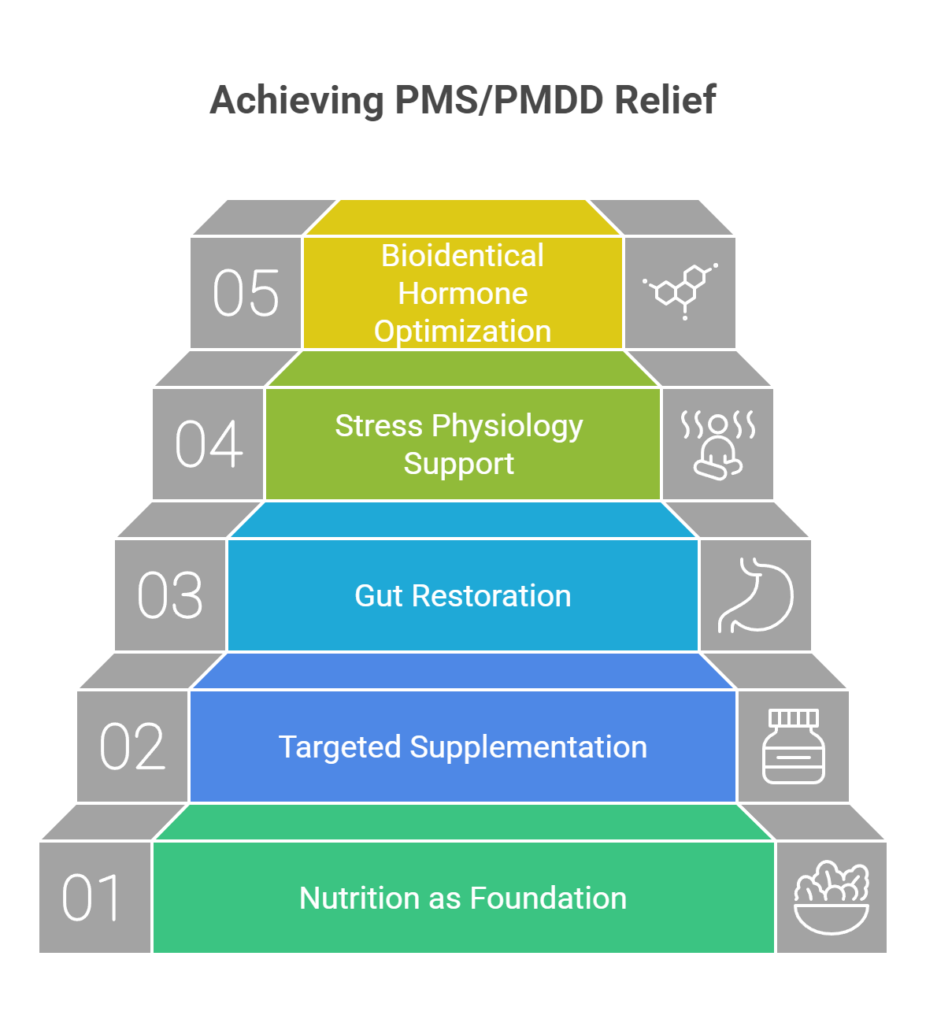
What Root-Cause Treatment for PMS and PMDD Actually Looks Like
There’s no single protocol that works for every woman, because PMS and PMDD aren’t the same in every woman. What we build is always personalized to the specific pattern of imbalance the testing reveals. That said, here are the core areas we address.
Nutrition as Foundational Medicine
An anti-inflammatory, nutrient-dense diet stabilizes blood sugar and reduces the hormonal volatility that drives mood symptoms during the luteal phase. Cruciferous vegetables support estrogen detoxification pathways. Adequate healthy fats and protein support hormone production and neurotransmitter balance. Reducing sugar, alcohol, and processed foods removes active drivers of inflammation and gut disruption. Dietary changes aren’t a suggestion we add at the end, they’re often where meaningful improvement begins.
Targeted Nutritional Supplementation
Based on testing, we may recommend:
- Magnesium for cramping, mood support, and sleep
- Vitamin B6 for serotonin and dopamine synthesis
- Vitamin D for hormone regulation and immune balance
- Calcium for documented symptom reduction
- Vitex (chaste tree berry) for progesterone support where appropriate
All practitioner-grade supplements we recommend are driven by what your labs actually show, not by a standard PMS formula.
Gut Restoration
We address gut health and the microbiome as a direct hormone management strategy. This may include probiotic and prebiotic support to restore estrobolome function, treatment of underlying GI conditions that are driving estrogen reabsorption, and dietary strategies that support regular elimination and reduce intestinal inflammation.
Stress Physiology and Nervous System Support
We approach cortisol and HPA axis dysfunction as a primary clinical target, not an afterthought. Sleep optimization, movement that supports rather than stresses the endocrine system, and evidence-based stress reduction practices are all part of how we help the body regulate its hormonal response to daily demands.
Bioidentical Hormone Optimization
When testing reveals progesterone deficiency or significant estrogen imbalance,bioidentical hormone therapy offers a precise, individualized path to restoration. Dosing is based on your individual physiology and adjusted over time with ongoing monitoring. This isn’t a one-size-fits-all approach, it’s a precision tool that separates a functional medicine protocol from a standard prescription.
PMS and PMDD Aren’t a One-Visit Problem, and Your Care Shouldn’t Be Either
Here’s something we tell patients often: The reason most women haven’t gotten better under conventional care isn’t that they didn’t try hard enough or that their case is too complicated. Instead, it’s that the care model wasn’t designed for what they actually needed.
PMS and PMDD are conditions that shift over time, and hormonal balance changes as women move through their 30s and 40s. Gut health fluctuates and stress loads change. Effective treatment requires ongoing monitoring, protocol adjustments, and a provider who knows your full picture and has time to actually engage with it.
That’s exactly what our personalized, functional medicine membership is designed to deliver. With longer appointments, a dedicated care team, and unlimited messaging through your patient portal, you’re not starting from scratch every time you have a question or notice a change. You have consistent access to providers and staff who know your history and are invested in your progress.
The membership model also removes the barriers that have made conventional care so frustrating: rushed visits, billing surprises, insurance-driven limitations on testing and time. It’s a structure built for the kind of continuous, personalized care that PMS and PMDD actually require.
Comprehensive, Integrated Care for PMS and PMDD in Colorado
What makes Vibrant Health of Colorado different isn’t any single service. It’s the combination we deliver. We integrate gynecology and women’s healthcare, hormone optimization, gut health evaluation, functional medicine, and comprehensive primary care under one roof. You don’t need to piece together a care team from multiple disconnected providers or re-explain your history at every appointment. And you don’t need to choose between a provider who understands hormones and a provider who can manage your general health.
We have clinics in Lone Tree (Denver Metro) and Eagle (Vail Valley), with statewide telehealth access for patients across Colorado. Our team of experienced nurse practitioners and physician assistants bring advanced training in functional medicine alongside the kind of clinical compassion that our patients consistently describe as the thing they couldn’t find anywhere else.

PMS Is Common. It’s Not Normal. And You Don’t Have to Keep Managing It Alone.
PMS and PMDD are among the most undertreated conditions in women’s healthcare, not because answers don’t exist, but because the right questions are rarely asked. If you’ve felt dismissed, handed a prescription without explanation, or told that what you’re experiencing is simply part of being a woman, we want you to know, you weren’t wrong to keep looking.
Root-cause care changes the trajectory. From symptom management to genuine resolution. From frustration to clarity. From cycling through treatments that don’t work to finally understanding what’s driving your symptoms and having a plan that addresses it directly.
The next step is simply a conversation, we’d be glad to have it with you.
New patients can visit our Contact Page to schedule a consultation or request an appointment. Existing patients can visit our Patient Portal Page. Or, call our Lone Tree office directly at (303) 730-2229 or our Eagle office at (970) 525-2229.
Frequently Asked Questions About PMS, PMDD, and Functional Medicine in Denver
What’s the difference between PMS and PMDD, and how do I know which one I have?
PMS involves recurring physical and emotional symptoms during the luteal phase of the menstrual cycle that are disruptive but generally manageable. PMDD involves more severe mood disturbances, including significant depression, anxiety, or irritability, that meaningfully interfere with daily life, relationships, and work. The key diagnostic feature of both is that symptoms resolve shortly after menstruation begins. If you’re unsure which applies to you, tracking your symptoms across two to three full cycles and bringing that record to a clinical evaluation is a good starting point. A functional medicine provider can help you distinguish between the two and identify the underlying drivers specific to your pattern.
If my labs are normal, does that mean I don’t have a hormone problem?
Not necessarily. Standard hormone panels are screening tools, not comprehensive investigative ones. They’re also typically drawn at a single point in the cycle, which doesn’t capture how hormone levels and their interactions shift across the luteal phase. In PMDD particularly, the issue is often not measurably abnormal hormone levels but an abnormal neurological sensitivity to normal hormonal fluctuations. A functional medicine evaluation uses more comprehensive panels, drawn at clinically relevant points in the cycle, and looks at a broader range of markers, including cortisol, DHEA, thyroid function, and nutrient levels, that standard testing doesn’t include.
Is bioidentical hormone therapy safe for PMS and PMDD?
Bioidentical hormone therapy, when prescribed and monitored by an experienced clinician, is a well-established and evidence-informed tool for addressing the hormonal imbalances that drive PMS and PMDD. It’s not appropriate for every patient, which is why thorough testing and individualized assessment come first. At Vibrant Health, we don’t apply hormone therapy as a default. We use it when testing reveals a specific deficiency or imbalance that it’s the right tool to address, and we monitor its effects over time with ongoing lab work and clinical check-ins.
Can gut health really affect my PMS symptoms?
Yes, and it’s one of the most commonly overlooked connections in women’s hormonal health. The estrobolome, which is the collection of gut bacteria responsible for metabolizing estrogen, plays a direct role in how estrogen is cleared from the body. When gut health is compromised, estrogen isn’t properly eliminated. It recirculates, worsening the estrogen dominance that drives many PMS symptoms. Bloating, constipation, and IBS-like patterns that worsen premenstrually are often a sign that the gut-hormone connection is a factor worth investigating.
How is Vibrant Health’s approach to PMS and PMDD different from what I’d find at a conventional provider?
The most significant difference is in the depth of the investigation and the structure of the care. Conventional providers are typically working within a system that rewards efficiency, which means shorter appointments, fewer tests, and treatment protocols designed for the average patient. At Vibrant Health, we use extended visits, comprehensive functional testing, and a personalized protocol that reflects your specific pattern of imbalance. We also integrate gynecological care, hormone optimization, gut health, and primary care in one practice, so your treatment plan doesn’t depend on multiple disconnected providers working in isolation. And our concierge membership model means you have ongoing access to your care team as your needs change over time, not just at your next scheduled appointment.

Deanna Woodroffe, WHNP, is the founder of Vibrant Health of Colorado and a passionate Women’s Health Nurse Practitioner with a focus on functional and integrative medicine. Early in her career, she became frustrated with the inability of traditional medicine to treat her patients’—and her own—chronic symptoms, driving her to pursue a fellowship in Anti-Aging and Functional Medicine. With over twenty years of experience, Deanna helps patients resolve complex, chronic symptoms by focusing on root causes and restoring balance to the body. Her comprehensive approach utilizes bio-identical hormone therapy, thyroid optimization, and addressing lifestyle factors like nutrition and stress to return her patients to feeling vibrant.