

Living with MCAS: A Functional Medicine Guide to Mast Cell Activation Syndrome and Natural Relief
You’ve Been Told Nothing Is Wrong. But Something Is.
Maybe it started with your skin, unpredictable hives, flushing that came out of nowhere. Then came the digestive issues, the fatigue that sleep never seemed to fix, the anxiety that felt physical rather than emotional. You saw a dermatologist, a gastroenterologist, maybe a cardiologist. You had labs drawn. You were told everything looked normal.
But you knew something was wrong. And you were right.
Mast Cell Activation Syndrome, commonly known as MCAS, is a real, increasingly recognized immune condition that conventional medicine is often poorly equipped to detect. Because its symptoms span so many body systems simultaneously, patients are frequently passed between specialists, each of whom sees only one piece of a much larger picture. What gets labeled as IBS, anxiety, fibromyalgia, or stress is, for many people, an immune system stuck in a perpetual state of alarm.
The functional medicine providers at Vibrant Health of Colorado want to help you change that experience. This article will cover:
- What mast cells are and what happens when they become chronically overreactive
- The full spectrum of MCAS symptoms, organized by body system
- Why conventional medicine so frequently misses this condition
- How a functional medicine approach investigates and addresses the root causes
- Dietary, gut health, supplement, and lifestyle strategies for lasting relief
- The important connection between hormones and mast cell activity
- What care at Vibrant Health of Colorado looks like for MCAS patients

What Are Mast Cells, and What Do They Do?
To understand MCAS, it helps to understand mast cells themselves.
Mast cells are specialized white blood cells found throughout the body, concentrated in the skin, the lining of the gut, the lungs, the brain, and connective tissue. Their job is to act as first responders. When they detect a perceived threat, whether an infection, a toxin, or a parasite, they rapidly release a cascade of chemical signals called mediators. Histamine is the most well-known of these, but mast cells produce more than 200 distinct chemical compounds, including prostaglandins, leukotrienes, tryptase, and cytokines.
In a well-functioning immune system, mast cells respond appropriately and then calm down. They are among the fastest-acting cells in the body, and that speed is by design. The problem in MCAS is not that mast cells exist. It is that they cannot stop responding.
What Is Mast Cell Activation Syndrome (MCAS)?
Mast cell activation syndrome occurs when mast cells become chronically overreactive, releasing their mediators too frequently, too intensely, or in response to things that pose no real threat. Foods, fragrances, temperature changes, stress, hormonal shifts, triggers that would not bother most people can set off a significant reaction in someone with MCAS.
The result is systemic, multi-organ inflammation that waxes and wanes over time. Unlike a standard allergy, which typically involves a clear trigger and a predictable response, MCAS has no single identifiable cause and affects multiple body systems at once. Symptoms can shift from day to day, which is part of why this condition is so difficult to pin down.
A clinical diagnosis of MCAS generally requires all three of the following:
- Recurrent episodes of severe symptoms affecting two or more body systems, consistent with mast cell mediator release
- Evidence of elevated mast cell mediators during or after an episode, such as serum tryptase, urinary N-methylhistamine, or prostaglandin D2
- Symptom improvement with mast cell-targeted therapies, such as antihistamines or mast cell stabilizers
It is important to distinguish MCAS from mastocytosis, which involves an abnormal proliferation of mast cells in the body. MCAS does not involve excess mast cells. It involves mast cells that behave abnormally. It is also broader than histamine intolerance, which represents just one facet of a larger pattern of immune dysregulation.
MCAS is thought to affect a meaningful and likely underestimated portion of people living with chronic, multi-system symptoms. It remains significantly underdiagnosed, in part because it requires a provider who is looking at the whole picture rather than one system at a time.
Recognizing MCAS Symptoms Across Body Systems
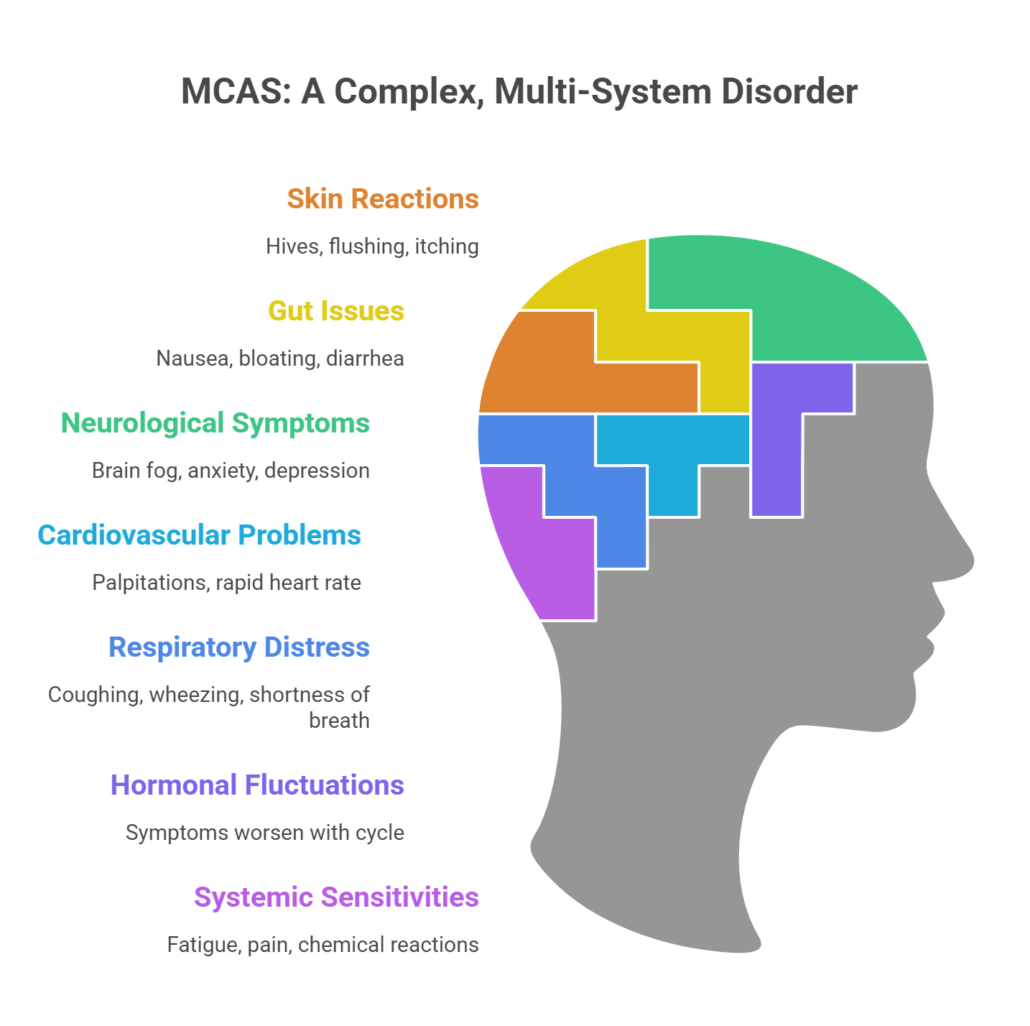
One of the most telling features of MCAS is how wide its reach can be. Symptoms are not confined to one area. They move, shift, and show up across multiple systems, often without an obvious explanation. If you have been living with symptoms that seem unrelated, this section may be the first time you see them as part of a coherent pattern.
- Skin: Hives, flushing, itching, rashes, and dermatographia (where light pressure on the skin leaves visible marks). Reactions may appear without a clear trigger or after exposure to heat, cold, or friction.
- Gut: Nausea, bloating, cramping, diarrhea, reflux, and food intolerances. The intestinal lining is dense with mast cells, making the gut one of the most reactive tissues in the body. Many MCAS patients have been told they have IBS for years before a more complete picture emerges.
- Neurological: Brain fog, difficulty concentrating, headaches, anxiety, and depression. Histamine is a neurotransmitter and directly affects brain function, which is why cognitive and mood symptoms are so prevalent in MCAS and so frequently misattributed to mental health conditions alone.
- Cardiovascular: Heart palpitations, rapid heart rate, low blood pressure, and dizziness upon standing. These symptoms overlap significantly with POTS (postural orthostatic tachycardia syndrome), a condition that commonly co-occurs with MCAS.
- Respiratory: Chronic cough, wheezing, nasal congestion, and shortness of breath driven by mast cell activity in the airways and respiratory lining.
- Hormonal: Many women notice that their symptoms worsen around their menstrual cycle, during perimenopause, or with certain forms of hormonal contraception. This is not coincidental, and we address this connection directly below.
- Systemic: Chronic fatigue, widespread pain, temperature dysregulation, and chemical sensitivities. People with MCAS often describe feeling like they react to everything, without being able to explain exactly why.
Symptoms vary widely between individuals and change over time. Recognizing this pattern is not the same as self-diagnosing. It is the first step toward getting the answers you deserve.
Common MCAS Triggers and Co-Occurring Conditions
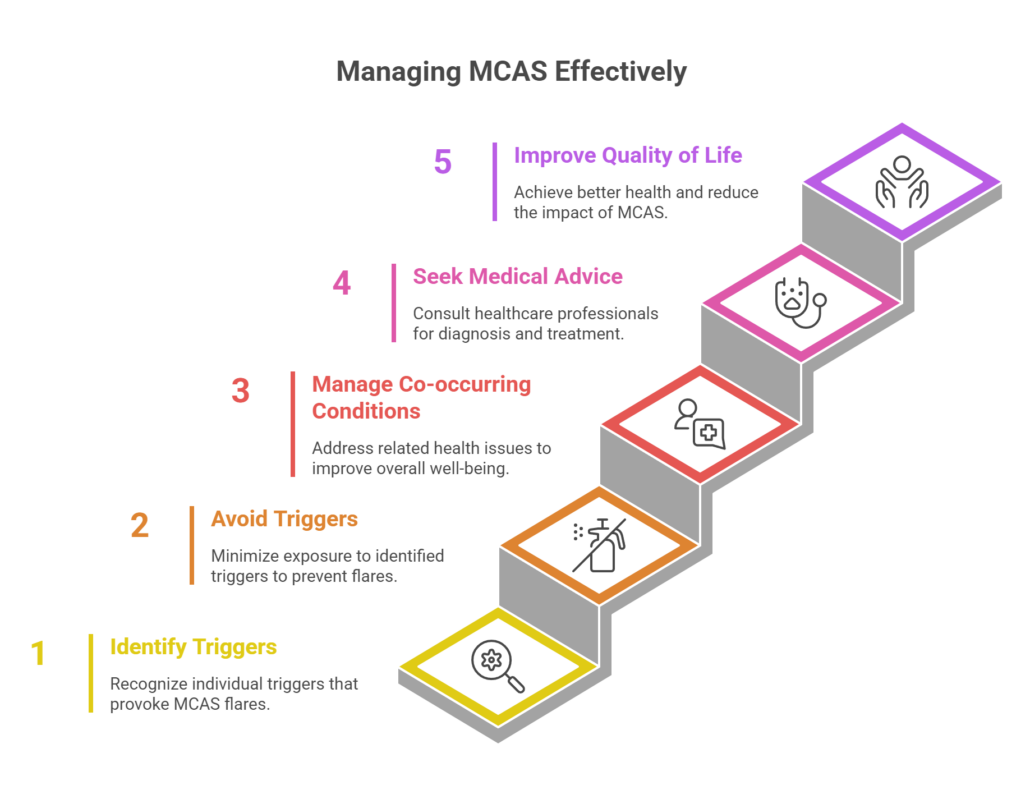
Understanding what provokes a mast cell flare is central to managing MCAS, though triggers are highly individual and often frustratingly inconsistent.
Common MCAS triggers include:
- Histamine-rich foods: aged cheeses, cured meats, alcohol, fermented foods, vinegar, and leftovers
- Strong fragrances, cleaning chemicals, and synthetic materials
- Mold exposure, a particularly significant and underrecognized driver
- Temperature extremes and physical exertion
- Emotional and physiological stress
- Hormonal fluctuations across the menstrual cycle or during perimenopause
- Certain medications, including NSAIDs, contrast dyes, and opioids
- Acute infections and illness
MCAS also frequently co-occurs with:
- IBS and SIBO (small intestinal bacterial overgrowth)
- Leaky gut and intestinal permeability
- POTS (postural orthostatic tachycardia syndrome)
- Ehlers-Danlos Syndrome
- Fibromyalgia and chronic fatigue syndrome
- Autoimmune conditions
- Anxiety and mood disorders
Research has identified a particularly common triad of MCAS, POTS, and hypermobility spectrum disorders in patients who have spent years seeking answers from multiple specialists. If you have been managing several of these diagnoses simultaneously, that is not bad luck. It may be a sign that a unifying root cause has not yet been identified.
Why Conventional Medicine So Often Misses MCAS
The structure of conventional medicine is not designed for MCAS. When symptoms affect the skin, the gut, the heart, and the brain simultaneously, patients are referred to a dermatologist, a gastroenterologist, a cardiologist, and a psychiatrist, each of whom evaluates their one system and finds nothing definitively wrong within that narrow frame.
Several structural factors contribute to this diagnostic gap:
- Standard lab work frequently comes back normal, particularly if tryptase is not measured during or immediately after a flare
- Tryptase must be drawn within a specific window following an episode to be meaningful, and most conventional providers are not ordering it with that timing in mind
- Symptoms are often mislabeled as anxiety, IBS, fibromyalgia, or stress when no clear cause is identified
- The conventional treatment approach, primarily H1 and H2 antihistamines and mast cell stabilizers, addresses symptom suppression but not root cause
Without asking why the mast cells became dysregulated in the first place, management is ongoing and incomplete. The underlying drivers continue to maintain the immune system in a state of alarm. This is where a functional medicine approach offers something fundamentally different.
The Functional Medicine Approach to MCAS
Functional medicine begins with a different question. Not “what are your symptoms and how do we suppress them?” but “what has caused your immune system to become so dysregulated, and what needs to change for it to find its way back to balance?”
For MCAS patients, this question opens a meaningful investigation. Common root causes explored through a functional medicine lens include:
- Gut dysfunction and intestinal permeability
- Chronic low-grade infections
- Environmental toxic burden, including mold exposure
- Nutrient deficiencies that impair immune regulation
- Hormonal imbalances, particularly the estrogen-progesterone relationship
- The cumulative physiological effects of chronic stress
In most cases, several of these factors are present simultaneously and reinforcing one another. This is a whole-person, systems-based approach that requires time, advanced testing, and a provider trained to hold the full picture.
At Vibrant Health of Colorado, we bring together functional medicine expertise, comprehensive primary care, gut health evaluation, and hormone optimization under one roof. For MCAS patients who are exhausted from seeing specialist after specialist without a coherent plan, this integrated model is not just convenient. It is clinically essential.

Functional Medicine Strategies for MCAS Relief
A functional medicine approach to MCAS is not a single protocol. It is a layered, individualized plan that addresses the specific root causes driving immune dysregulation in each patient.
Dietary Changes: The Low-Histamine Foundation
A low-histamine diet is typically the first dietary intervention. Foods to reduce or eliminate include aged cheeses, cured meats, alcohol, fermented foods, vinegar, shellfish, and leftovers. Eating fresh, whole foods prepared close to mealtime significantly reduces the histamine load on the body. Individual food sensitivities go beyond histamine and vary from person to person, making a symptom and food journal a valuable tool for identifying personal triggers. Dietary change is foundational but rarely sufficient on its own.
Gut Health Restoration
The gut is one of the most important therapeutic targets in MCAS. The intestinal lining contains a high density of mast cells, and when gut integrity is compromised through leaky gut, SIBO, or dysbiosis, it perpetuates chronic immune activation throughout the body. Targeted gut protocols address SIBO when present, repair intestinal permeability using specific nutrients, and work to rebalance the microbiome over time. This is often where the most significant early improvement begins.
Targeted Supplementation for Mast Cell Support
Several well-studied nutrients and plant compounds support mast cell stability as part of a broader care plan:
- Quercetin and luteolin: Plant flavonoids that help stabilize mast cell membranes and reduce the tendency toward degranulation
- Vitamin C: Functions as a natural antihistamine and supports DAO enzyme activity
- DAO enzyme supplements: Help break down dietary histamine before it is absorbed
- Omega-3 fatty acids: Provide anti-inflammatory support at the cellular level
- Magnesium: Supports mast cell stability and nervous system regulation
- Vitamin D: Frequently deficient in MCAS patients and important for immune regulation
- Probiotics: Can be helpful but require careful strain selection, as some strains increase histamine load and worsen symptoms
Working with a knowledgeable provider is essential when building a supplement plan for MCAS. What helps one patient can provoke a reaction in another.
Stress, Sleep, and the Nervous System
This is not a soft recommendation. The nervous system and mast cells communicate directly and bidirectionally. Emotional stress, physiological stress, and poor sleep all have documented, measurable effects on mast cell activity. Evidence-based approaches include breathwork, mindfulness practices, somatic therapies, and prioritizing consistent, restorative sleep. Addressing chronic stress patterns is part of root-cause care for MCAS, not an afterthought.
Environmental Medicine and Reducing Toxic Burden
Mold is one of the most significant and underrecognized drivers of mast cell dysregulation. For patients in Colorado, where wildfire smoke and environmental particulates create additional physiological demands, reducing toxic burden is especially relevant. Transitioning to fragrance-free cleaning and personal care products and minimizing pesticide and chemical exposures all reduce the cumulative load on an already overtaxed immune system.
The Hormone Connection: What Women with MCAS Need to Know
Estrogen has a direct stimulating effect on mast cell activity. Progesterone, by contrast, tends to have a stabilizing effect. This hormonal relationship explains a pattern that many women with MCAS recognize immediately:
- Symptoms worsen in the days before menstruation when progesterone drops
- Flares become more frequent and severe during perimenopause as hormonal fluctuations intensify
- Certain forms of hormonal contraception trigger or worsen reactions
For women navigating MCAS, hormone balance is not a separate conversation. It is part of the same one. Optimizing hormones through a careful, individualized approach can meaningfully reduce the frequency and severity of mast cell flares. This is a natural extension of Vibrant Health’s deep expertise in hormone optimization for women, and it is one of the reasons our integrated model serves MCAS patients so effectively. Treating hormones and mast cell activity as separate problems, managed by separate providers, leaves a significant piece of the puzzle unaddressed.

What to Expect from MCAS Care at Vibrant Health
MCAS is a chronic condition, and recovery is gradual and nonlinear. Understanding this at the outset protects against discouragement and sets the foundation for a sustainable long-term relationship with your care team.
Progress in MCAS care looks like:
- Fewer flares and reduced severity of reactions over time
- An expanding tolerance for foods and environments that previously triggered symptoms
- Improving energy, mental clarity, and mood stability
- Better quality of life, measured in real terms, not just lab values
At Vibrant Health of Colorado, our providers bring together functional medicine expertise, gut health evaluation, hormone optimization, and comprehensive primary care within one care relationship. MCAS patients have often spent years accumulating specialists. Here, the full picture is held by a compassionate, thorough team that listens deeply and builds a personalized plan from the ground up.
We see patients at our Lone Tree location in the Denver Metro area and at our Eagle location serving the Vail Valley. For patients across Colorado who are not able to come in person, we offer statewide telehealth access. Whether you are searching for an MCAS doctor in Denver, exploring functional medicine treatment for mast cell disease, or simply looking for a provider who will take your symptoms seriously and investigate them completely, we are here.
If you recognize yourself in this article, if you have been dismissed, misdiagnosed, or told your symptoms do not add up to anything diagnosable, we want you to know that you are not imagining it. Your symptoms are real. The connections between them are real. And there is a path forward that looks at all of it together.
A consultation with Vibrant Health of Colorado is the first step toward a care plan that addresses root causes rather than managing symptoms in isolation. Reach out to our Lone Tree or Eagle office today, or connect with us via telehealth from anywhere in Colorado. You deserve to feel vibrant again.
Vibrant Health of Colorado is an integrative medical practice providing functional medicine, comprehensive primary care, women’s health, and hormone optimization for adults across Colorado. With clinics in Lone Tree and Eagle and statewide telehealth access, we blend evidence-based functional medicine with traditional care to identify root causes, build meaningful provider-patient relationships, and help patients feel truly heard, supported, and well.

Erynn Gonzales, PA-C is a board-certified, licensed Physician Assistant who is passionate about helping patients achieve their health and lifestyle goals! Erynn has worked in primary care for 14 years and counting. After graduating with a Master’s Degree in Physician Assistant Studies from Midwestern University in 2009, Erynn practiced Internal Medicine and Pediatrics for four years in Phoenix, AZ. During these first few years, she noticed enormous gaps in healthcare and embarked on several years of self-study in ancestral nutrition and natural healing to be able to provide more to her patients, learning how to blend conventional and functional medicine.