

Tired, Wired, and Can’t Sleep? What Functional Medicine Reveals About Stress and Your Cortisol Levels
You’re exhausted by 2pm. You rely on coffee to get through the morning. By the time evening arrives, you finally feel awake, alert, restless, unable to wind down. You lie in bed while your mind races, and the next morning the whole cycle starts again. Sound familiar?
If you’ve brought this up with a conventional provider, there is a good chance you were told your labs look fine, advised to reduce your stress, or handed a prescription for sleep or anxiety. And if that response left you feeling dismissed and no closer to answers, you’re not alone.
This pattern has a name and a physiological explanation. At Vibrant Health of Colorado, it’s one of the most common things we investigate, and one of the most commonly overlooked by standard care.
What follows is a clear, honest explanation of what cortisol dysregulation actually is, why conventional testing often misses it, how we evaluate and address it using a functional medicine approach, and what recovery can genuinely look like. If you’ve been searching for answers, this is a good place to start.

What Is Cortisol, and Why It Gets a Bad Reputation It Does Not Deserve
Cortisol has become shorthand for stress and burnout, which has given it an unfairly negative image. In reality, cortisol is not your enemy, it’s one of the most essential hormones your body produces.
Cortisol regulates your energy and wakefulness, your blood sugar, your inflammatory response, and your ability to mobilize resources under pressure. Without it, you couldn’t get out of bed in the morning, respond to physical or emotional demands, or recover from illness.
What matters is not simply how much cortisol you produce, but when you produce it. A healthy cortisol rhythm looks like this: levels peak in the early morning to help you wake and feel alert, decline gradually through the afternoon, and reach their lowest point at night to allow deep, restorative sleep.
The problems we see clinically are rarely about cortisol being universally too high or too low. They’re about the rhythms being disrupted; this is cortisol dysregulation. Timing is everything, and when cortisol production no longer follows its natural arc, every system that depends on it begins to feel the effects.
Understanding the HPA Axis, the Real System Behind Your Stress Response
You may have heard the term “adrenal fatigue” and wondered if that’s what you are dealing with. It’s a phrase that resonates for a reason. The exhaustion, the inability to recover, the sense that your body simply cannot keep up. But the clinical picture is more nuanced than the adrenal glands simply running out of steam.
What’s actually happening, in most cases, is a disruption to the HPA axis. This is the hypothalamic-pituitary-adrenal axis, the communication loop that runs between your brain and your adrenal glands. When your brain perceives stress, the hypothalamus signals the pituitary, which signals the adrenal glands to produce cortisol. Under normal circumstances, a feedback mechanism tells the brain when enough cortisol has been released, and the system returns to baseline.
Chronic stress disrupts that feedback loop. Over time, the signaling between brain and adrenal glands becomes dysregulated. The system loses its rhythm. Cortisol may be produced at the wrong times, in the wrong amounts, or in a pattern that no longer matches what the body needs.
This is why functional medicine focuses on restoring the HPA axis as a whole, rather than simply trying to boost adrenal output or suppress cortisol. The adrenal glands are responding to signals from above. The real work is in understanding what disrupted those signals and why the system cannot find its way back to balance.

Why Modern Life Is Pushing Cortisol Out of Balance
HPA axis dysfunction does not usually happen overnight. It builds. The cumulative load of daily stressors, compounded over months or years, gradually shifts the system away from its natural rhythm.
Some of the most common contributors we see include:
- Chronic psychological stress: Work pressure, caregiving responsibilities, financial strain, relationship conflict, and the relentless cognitive load of a digitally connected life.
- Blood sugar instability: Diets high in processed carbohydrates and sugar create repeated spikes and crashes that the adrenal glands must respond to, adding to the overall stress load.
- Disrupted sleep and circadian signals: Irregular sleep schedules, late-night screen exposure, and insufficient time in darkness all interfere with the cortisol rhythm that depends on consistent light-dark cues.
- Overtraining without recovery: High-intensity exercise is itself a physiological stressor, and when recovery is inadequate, it contributes to cumulative HPA axis burden.
- Gut dysfunction and chronic inflammation: an inflamed or imbalanced gut activates immune pathways that signal stress to the brain, keeping the HPA axis in a state of low-grade activation.
- Nutrient depletion: magnesium, B vitamins, and vitamin C are all consumed in greater quantities during periods of chronic stress, and deficiencies in these nutrients impair the body’s ability to regulate the stress response.
The key insight is that no single factor is usually responsible. Cortisol dysregulation is almost always the result of multiple stressors converging over time, until the system can no longer compensate. Understanding which factors are driving it in a particular patient is exactly what a thorough functional medicine evaluation is designed to uncover.
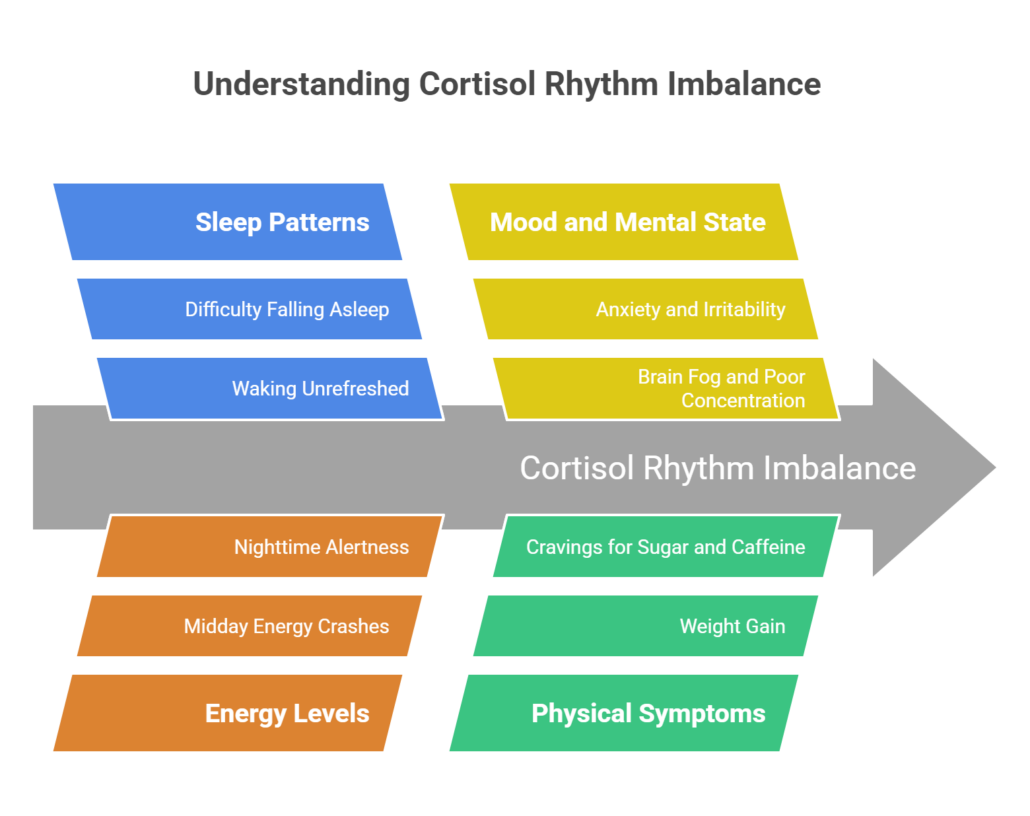
Signs Your Cortisol Rhythm May Be Off
Because cortisol touches so many systems, its dysregulation tends to show up in multiple ways at once. These symptoms are frequently treated as separate problems in conventional care, each assigned its own diagnosis and prescription. In our experience, they’re often simply the same underlying pattern presenting differently.
Common signs that your cortisol rhythm may be disrupted include:
- Feeling exhausted during the day but alert or wired at night
- Difficulty falling asleep or staying asleep despite feeling tired
- Waking unrefreshed, even after a full night of sleep
- Heavy reliance on caffeine to start or sustain the day
- Midday energy crashes that make it difficult to function
- Anxiety, irritability, or mood swings without a clear cause
- Brain fog, poor concentration, or difficulty retaining information
- Weight gain, particularly around the midsection
- Cravings for sugar, salt, or caffeine, especially in the afternoon or evening
- A persistent sense of burnout, or the feeling that you simply cannot recover from stress the way you used to
- Worsening perimenopausal or menopausal symptoms, including hot flashes, mood changes, and sleep disruption
If several of these feel familiar, you’re not imagining it. And, you’re not simply dealing with the inevitable consequences of a demanding life. Your body is signaling an imbalance that deserves a real investigation, not reassurance that everything looks normal.
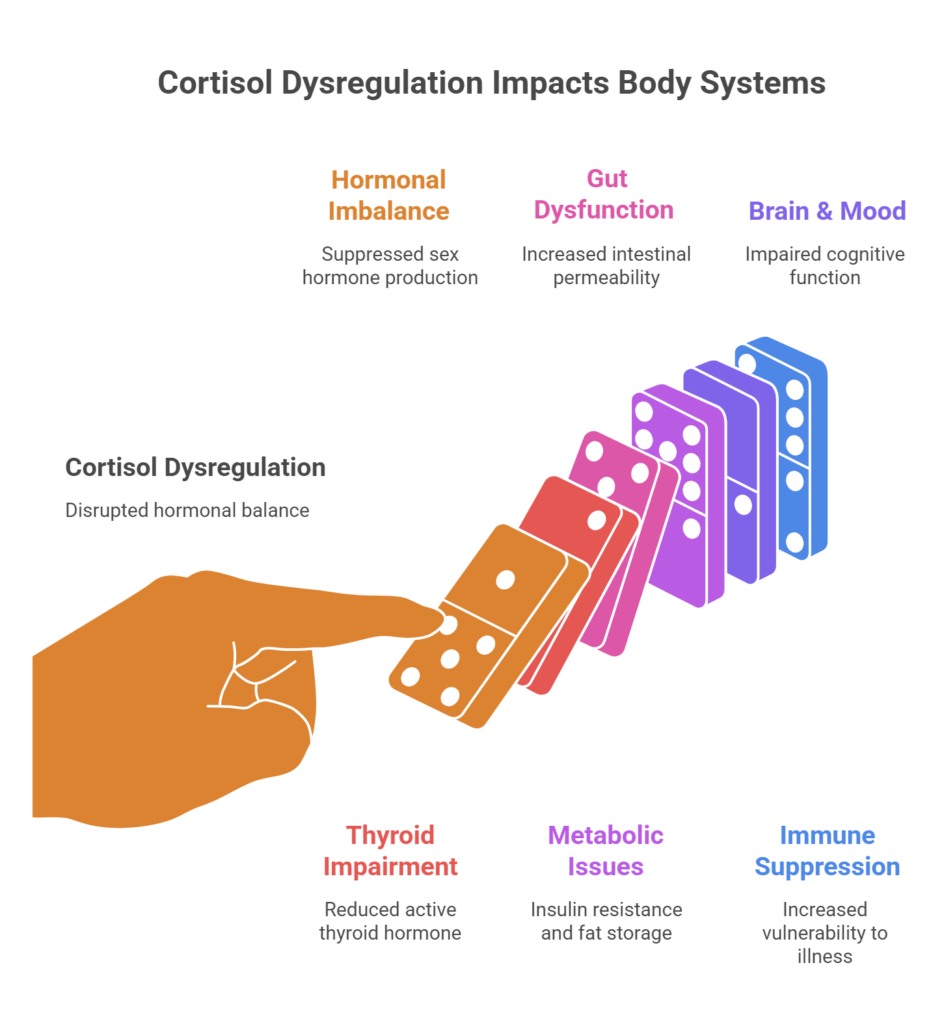
How Cortisol Dysregulation Affects the Rest of Your Body
One of the reasons cortisol dysfunction is so disruptive is that cortisol does not operate in isolation. It is deeply interconnected with nearly every other hormonal and physiological system in the body.
Hormones: Cortisol and the sex hormones share upstream resources. When the body is under chronic stress, it prioritizes cortisol production, which can suppress the production of estrogen, progesterone, and testosterone. For women in perimenopause, this can dramatically worsen the hormonal transition. For men, it contributes to declining testosterone, low motivation, and diminished stamina.
Thyroid: Chronic cortisol elevation impairs the conversion of inactive thyroid hormone to its active form. This is a common reason patients feel all the symptoms of low thyroid, including fatigue, weight gain, and cognitive sluggishness, while their standard thyroid labs appear within the normal range.
Gut health: Cortisol increases intestinal permeability, contributing to what is commonly called leaky gut, and disrupts the balance of the gut microbiome. This creates a feedback loop: gut dysfunction signals stress to the brain, which activates the HPA axis further, which worsens gut function.
Metabolism: Elevated cortisol promotes insulin resistance and signals the body to store fat, particularly visceral fat in the abdominal area. This is part of why stress-related weight gain tends to concentrate in the midsection and resists conventional diet and exercise approaches.
Brain and mood: Cortisol affects the hippocampus, the brain region responsible for memory and emotional regulation. Chronic dysregulation impairs cognitive function, reduces stress resilience, and is a significant but underrecognized driver of anxiety and depression.
Immune function: Cortisol is a potent modulator of the immune system. Chronic dysregulation can both suppress immunity, leaving patients more vulnerable to illness, and drive chronic low-grade inflammation that underlies a wide range of persistent health complaints.
This is why we say cortisol is a keystone hormone. When its rhythm is disrupted, almost everything feels off, because almost everything is affected. And it’s also why treating each symptom individually, without addressing the underlying cortisol pattern, tends to produce limited and short-lived results.
Why Conventional Testing Often Misses Cortisol Dysregulation
If you’ve had your cortisol tested by a conventional provider and been told your results were normal, that result may be accurate as far as it goes. The challenge is how far standard testing is actually designed to go.
Conventional cortisol testing typically involves a single blood draw, usually taken in the morning. This measurement tells us whether cortisol is within a broad reference range at one specific moment in time. What it does not tell us is anything about how cortisol behaves across the rest of the day, whether the morning peak is blunted or exaggerated, whether cortisol fails to decline in the evening, or whether the overall rhythm is following the pattern the body requires.
A patient with significant HPA axis dysregulation can produce a completely normal result on a standard cortisol blood test. This is not a failure of the lab, it’s simply a limitation of what that test was designed to measure.
Standard cortisol testing has an important place in medicine, particularly for ruling out serious conditions like Addison’s disease or Cushing’s syndrome. But for the subtler rhythm dysregulation that drives the exhaustion, anxiety, and sleep disruption so many of our patients describe, a single morning blood draw leaves most of the picture unseen. This is the gap that functional medicine testing is designed to fill.
How We Evaluate Cortisol at Vibrant Health of Colorado
When a patient comes to us with symptoms that suggest HPA axis dysfunction, our evaluation is designed to capture what standard testing cannot.
Comprehensive cortisol rhythm testing typically uses salivary or urine samples collected at multiple points throughout the day, including morning, midday, afternoon, and evening. This gives us a full picture of how cortisol production rises and falls over the course of a day, where the pattern deviates from healthy norms, and what that deviation might mean for the patient’s symptoms.
Cortisol testing is rarely the only piece of the picture. Depending on the patient, we often pair it with:
- Sex hormone panels (estrogen, progesterone, testosterone, DHEA)
- Thyroid markers, including markers that standard panels frequently omit
- Gut health evaluation
- Inflammatory markers
- Nutrient status, including magnesium, B vitamins, and vitamin D
The goal is not to find a single number to fix, it’s to understand the full context of why a particular patient’s body is stuck in a stress pattern, and what is sustaining that pattern. Testing informs the plan, then the plan is built around the individual.
We see patients in person at our Lone Tree clinic in the Denver Metro area and our Eagle clinic serving the Vail Valley. For patients across Colorado who prefer a virtual visit, we offer telehealth appointments that provide the same level of personalized evaluation and follow-through.

A Functional Medicine Approach to Restoring Cortisol Balance
Once we have a clear picture of what is driving HPA axis dysregulation for a specific patient, we build a personalized protocol that addresses the root causes. That protocol typically draws on several interconnected areas.
Nutrition That Supports Hormonal Stability
Blood sugar regulation is the foundation of cortisol recovery. Every blood sugar spike triggers a cortisol response, so a diet that creates frequent glucose instability is continuously activating the HPA axis. We focus on building meals around protein, healthy fats, and fiber, reducing processed carbohydrates and sugar, and ensuring patients are getting adequate micronutrients, particularly magnesium, B vitamins, and vitamin C, all of which are depleted by chronic stress and essential for HPA axis function. Practitioner-grade supplements are recommended as part of a care plan.
Sleep as a Clinical Priority
Sleep and cortisol regulation are the same system. You cannot restore one without restoring the other. We work with patients to rebuild circadian rhythm through consistent sleep and wake times, morning light exposure to anchor the cortisol peak, and meaningful reduction of blue light exposure in the evening. For many patients, sleep hygiene is not a lifestyle suggestion, it’s a clinical intervention.
Nervous System Regulation
Cortisol dysregulation is, at its core, a nervous system that has forgotten how to shift out of stress activation. Daily practices that stimulate the parasympathetic nervous system, including breathwork, mindfulness, gentle movement, and intentional rest, are not optional additions to the plan, they’re part of the treatment. Stress resilience is a physiological capacity that can be rebuilt with the right support.
Movement That Restores Rather Than Depletes
Exercise is a stressor. For a well-regulated system, that stress is productive and followed by recovery. For a dysregulated HPA axis, high-intensity training without adequate rest can perpetuate the problem. We typically shift patients toward restorative movement, including walking, moderate strength training, and yoga, and pay attention to timing, since the type and intensity of exercise affects the cortisol response.
Targeted Supplementation and Adaptogens
Adaptogenic herbs including ashwagandha, rhodiola, and holy basil have meaningful evidence for supporting HPA axis function. Magnesium, in the right form and dose, is consistently valuable. But the specific protocol depends entirely on the individual cortisol pattern we identify through testing. An adaptogen that supports a patient with low, flat-line cortisol may not be appropriate for someone whose cortisol is elevated in the evening. We test first, then support specifically.
You’re Not Just Tired, and You Don’t Have to Stay That Way
The pattern we’ve described in this article, the exhaustion that does not respond to rest, the anxiety without a clear cause, the sleep that never quite restores, the sense that your body is running on fumes, is not simply a character flaw. It’s not simply the cost of a demanding life either. Instead, it’s a physiological signal that deserves a real clinical response.
The providers and staff at Vibrant Health are Colorado functional medicine experts offering hormone optimization for men and women, gut health evaluation, and comprehensive primary care under one roof, in Lone Tree, in Eagle, and statewide through telehealth. Our providers are experienced in evaluating the full picture of HPA axis dysfunction, not just the cortisol number, but the hormonal environment, the gut-brain connection, the sleep architecture, and the lifestyle patterns that sustain or disrupt the whole system.
The kind of care that cortisol recovery requires, including time, thorough testing, personalized planning, and an ongoing relationship with providers and staff who know your full picture, is precisely what our comprehensive functional medicine membership model is built to provide. It’s not a quick fix. Instead, it’s the kind of medicine that actually works.
If you recognize yourself in what you’ve read here, we would welcome the conversation. Reach out today to schedule a consultation, and let us take a closer look at what your cortisol pattern may be telling us.
Your energy can return, and your sleep can normalize. Feeling vibrant is not just a possibility, it’s what we work toward with every patient, every day.
Frequently Asked Questions About Cortisol Imbalance and Functional Medicine
What is the difference between adrenal fatigue and HPA axis dysfunction?
“Adrenal fatigue” is a term commonly used to describe the exhaustion, burnout, and stress-related symptoms that come with chronic physiological overload. It resonates with patients because it captures the experience accurately. However, from a clinical standpoint, the more precise framework is HPA axis dysfunction, which refers to a disruption in the communication loop between the brain and the adrenal glands that governs how and when cortisol is produced. The adrenal glands are usually not failing. They are responding to dysregulated signals from above. Functional medicine focuses on identifying and addressing those disrupted signals, not simply supporting the adrenal glands in isolation.
Will my regular doctor test my cortisol?
A conventional provider can order a cortisol blood test, and in some cases that is appropriate, particularly for ruling out serious endocrine conditions. However, standard cortisol blood tests capture a single point in time and do not evaluate the daily rhythm that functional medicine assesses. Many patients with significant HPA axis dysregulation have completely normal results on standard cortisol panels. If you have been tested and told your levels are normal while still experiencing significant symptoms, a more comprehensive rhythm evaluation may be the missing piece.
Can cortisol imbalance affect my hormones or thyroid?
Yes, and this connection is one of the most important and most overlooked aspects of HPA axis dysfunction. Chronic cortisol dysregulation suppresses the production of sex hormones including estrogen, progesterone, and testosterone, which is why stress so often worsens perimenopausal symptoms or contributes to low libido and mood changes. It also impairs the conversion of thyroid hormone to its active form, which can produce symptoms of low thyroid even when standard thyroid labs look normal. At Vibrant Health, we evaluate these systems together, because they do not operate in isolation.
How long does cortisol recovery take?
Recovery from HPA axis dysregulation is gradual, and it varies by individual. Many patients notice meaningful improvements in sleep quality, energy, and mood within the first several weeks of a consistent, comprehensive protocol. Full restoration of a healthy cortisol rhythm and the broader hormonal balance that supports it typically takes several months. Progress is not always linear, and periods of external stress can temporarily set things back, which is why ongoing provider support and plan adjustments are an important part of the process. We set honest expectations from the start, because sustainable recovery is more valuable than a quick improvement that does not hold.
Do I need to come into a clinic, or can I work with Vibrant Health remotely?
Both options are available. We see patients in person at our Lone Tree clinic in the Denver Metro area and our Eagle clinic in the Vail Valley. For patients elsewhere in Colorado, we offer telehealth appointments that include the same thorough intake, testing coordination, and personalized care planning. Comprehensive cortisol and hormone testing can be coordinated through mail-in collection kits, so geography is not a barrier to getting a complete evaluation.
Vibrant Health of Colorado is an integrative medical practice providing functional medicine, comprehensive primary care, women’s health, and hormone optimization for adults across Colorado. With clinics in Lone Tree and Eagle and statewide telehealth access, the practice blends evidence-based functional medicine with traditional care to identify root causes, build meaningful provider relationships, and help patients feel truly heard, supported, and well.

Deanna Woodroffe, WHNP, is the founder of Vibrant Health of Colorado and a passionate Women’s Health Nurse Practitioner with a focus on functional and integrative medicine. Early in her career, she became frustrated with the inability of traditional medicine to treat her patients’—and her own—chronic symptoms, driving her to pursue a fellowship in Anti-Aging and Functional Medicine. With over twenty years of experience, Deanna helps patients resolve complex, chronic symptoms by focusing on root causes and restoring balance to the body. Her comprehensive approach utilizes bio-identical hormone therapy, thyroid optimization, and addressing lifestyle factors like nutrition and stress to return her patients to feeling vibrant.



Leave a Reply
Want to join the discussion?Feel free to contribute!