

What Standard Bloodwork Misses: How We Test for Chronic Inflammation at the Root Level
If you’ve been told your labs are normal but you’re still exhausted, foggy, and not feeling like yourself, you’re not imagining things, and chronic inflammation is one of the most frequently overlooked drivers of persistent symptoms because standard bloodwork panels simply aren’t designed to find it. We see this every week at Vibrant Health of Colorado, where patients who have done all the right things, seen multiple providers, and still have no explanation for why they feel so unwell come to us looking for answers. This article explains what chronic inflammation is, why conventional testing misses it, and what a more thorough functional medicine approach looks like in practice.

The Short Answer: Why Your Labs Can Be ‘Normal’ and Still Miss Inflammation
Standard primary care panels, including the CBC, CMP, basic lipid panel, and TSH, catch acute disease and organ failure. They aren’t designed to detect low-grade, systemic inflammation because a basic CRP test only flags severe acute inflammation and will read normal at the lower levels that still drive fatigue, brain fog, and joint pain. The markers that actually reveal chronic, smoldering inflammation are not on the standard order sheet. This is not anyone’s fault, but rather a structural gap in how conventional primary care is set up, and this is exactly the gap we work in.
Acute Inflammation vs. Chronic Inflammation: Why the Difference Matters
Most people know inflammation as the swelling and redness that comes with a sprained ankle or a sore throat. That is acute inflammation, which is purposeful because the immune system responds to a threat, ramps up, and then resolves once the threat is gone. Chronic low-grade inflammation is different in nearly every way because there is no obvious injury, no visible swelling, and the immune system stays in a persistent, low-level activation state, quietly producing cytokines and inflammatory proteins that interfere with normal tissue function across multiple body systems over months or years.
The damage accumulates gradually. Because there is no single dramatic trigger, patients often dismiss their symptoms as stress, aging, or just how they feel now. The immune system’s persistent signaling through pro-inflammatory cytokines like interleukin-6 and tumor necrosis factor-alpha contributes to insulin resistance, endothelial dysfunction, and disrupted neurotransmitter metabolism that shows up as fatigue and cognitive slowing long before any conventional marker flags it. This is the knowledge gap that makes so many patient experiences so frustrating because when they say “I feel terrible but nothing is wrong,” they mean nothing showed up on standard bloodwork. What they have not yet learned is that the tests ordered were not looking for what is actually driving their symptoms.
Chronic Inflammation Symptoms: The Connections Most Providers Don’t Make
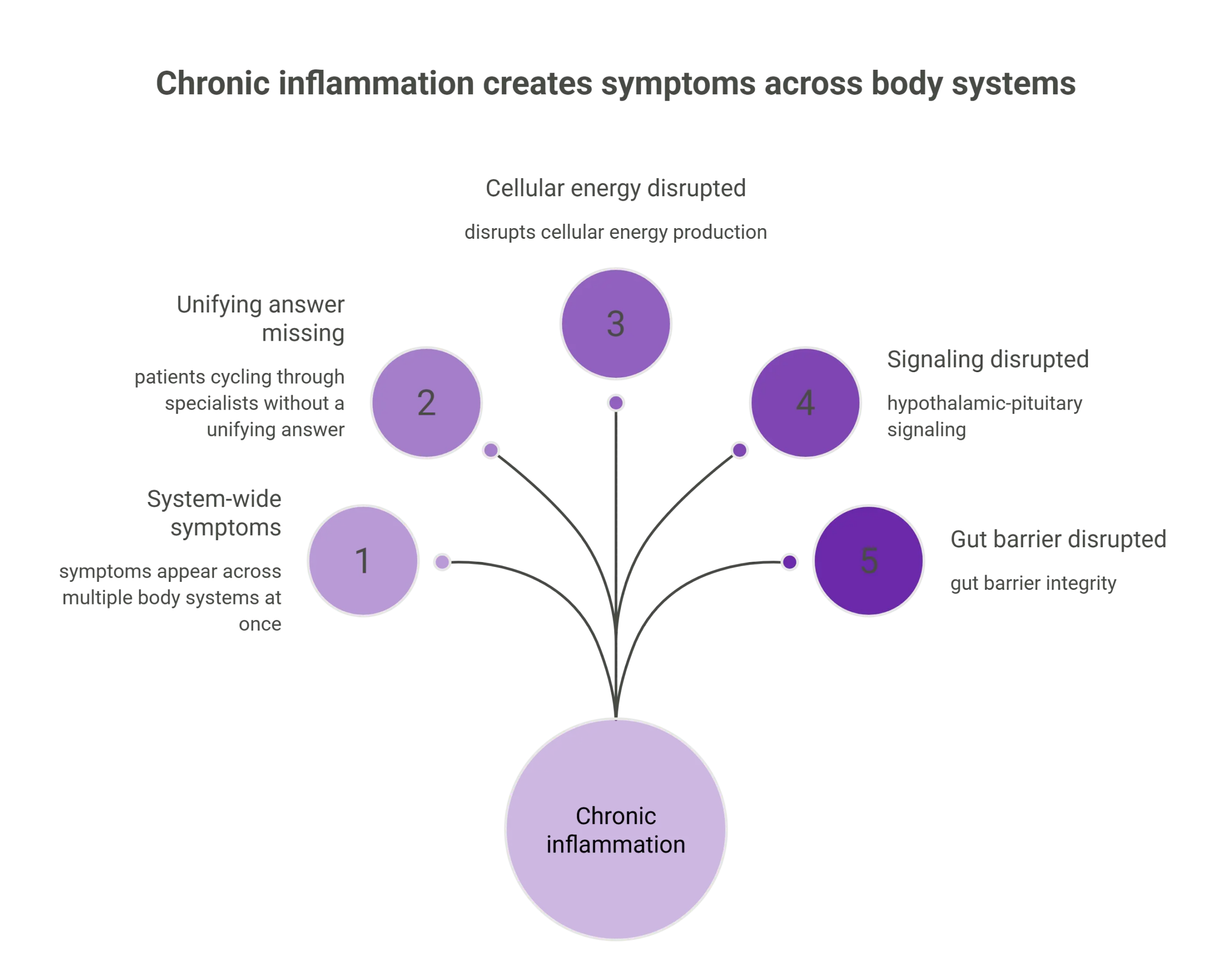
The reason chronic inflammation symptoms evaluated through a functional medicine lens can feel life-changing is that inflammation is systemic, and the symptoms it creates appear across multiple body systems at once. This pattern is almost never explained in a standard 15-minute visit, and that leaves patients cycling through specialists without a unifying answer.
- Persistent fatigue that sleep does not fix
- Difficulty concentrating or recalling words
- Joint pain and stiffness without any clear injury
- Unexplained weight gain or stubborn weight loss resistance
- Mood changes including anxiety and low-grade depression
- Unrefreshing sleep
- Frequent illness or slow recovery from minor infections
- Digestive symptoms like bloating and irregularity
- Skin flares that come and go without explanation
All these presentations are regularly seen in patients with undetected chronic inflammation. They share a common thread in the sustained cytokine activity that disrupts cellular energy production, hypothalamic-pituitary signaling, and gut barrier integrity simultaneously.
Vibrant Health of Colorado was founded around the observation that patients with exactly this cluster of symptoms were being told they were fine, or worse, being offered an antidepressant without any investigation into what was actually driving their mood changes. The approach from the start was to find the cause before reaching for a prescription. If we can find the cause of someone’s anxiety or depression, we would much rather treat the cause than use medication as a band-aid. These symptoms are real, they have a measurable physiological mechanism, and they deserve a real clinical investigation.
What Standard Bloodwork Actually Measures (And What It Leaves Out)
To understand the gap, it helps to know what a standard panel actually covers: the CBC checks red and white blood cell counts and platelets, the CMP evaluates kidney and liver function along with blood sugar, the basic lipid panel measures total cholesterol, LDL, HDL, and triglycerides, and TSH screens for significant thyroid dysfunction. All of these are genuinely useful for what they are designed to find, and none of them are designed to find chronic low-grade inflammation. A basic CRP test, if it is ordered at all, only registers at levels associated with acute infection or significant tissue injury and will return normal at the subtler elevations that still correlate with cardiovascular risk, metabolic dysfunction, and systemic immune activation.
Harvard Health has documented that inflammation tests are “not a part of routine medical care for all adults.” Even when ordered, standard markers confirm that inflammation exists without identifying where it comes from or which body systems are involved. The reference ranges used in conventional care are calibrated for disease detection rather than functional optimization. A ferritin or fasting glucose that falls within the broad standard range can still reflect metabolic inflammation that a functional interpretation would flag.
It’s worth being clear that this is not a criticism of individual primary care providers because a provider seeing patients in 15-minute slots under insurance-driven protocols does not have the time or the clinical mandate to order an expanded inflammatory panel and then spend 45 minutes interpreting it with the patient. That structural limitation is precisely why a different care model matters.
The Functional Medicine Inflammation Panel: What We Test at Vibrant Health
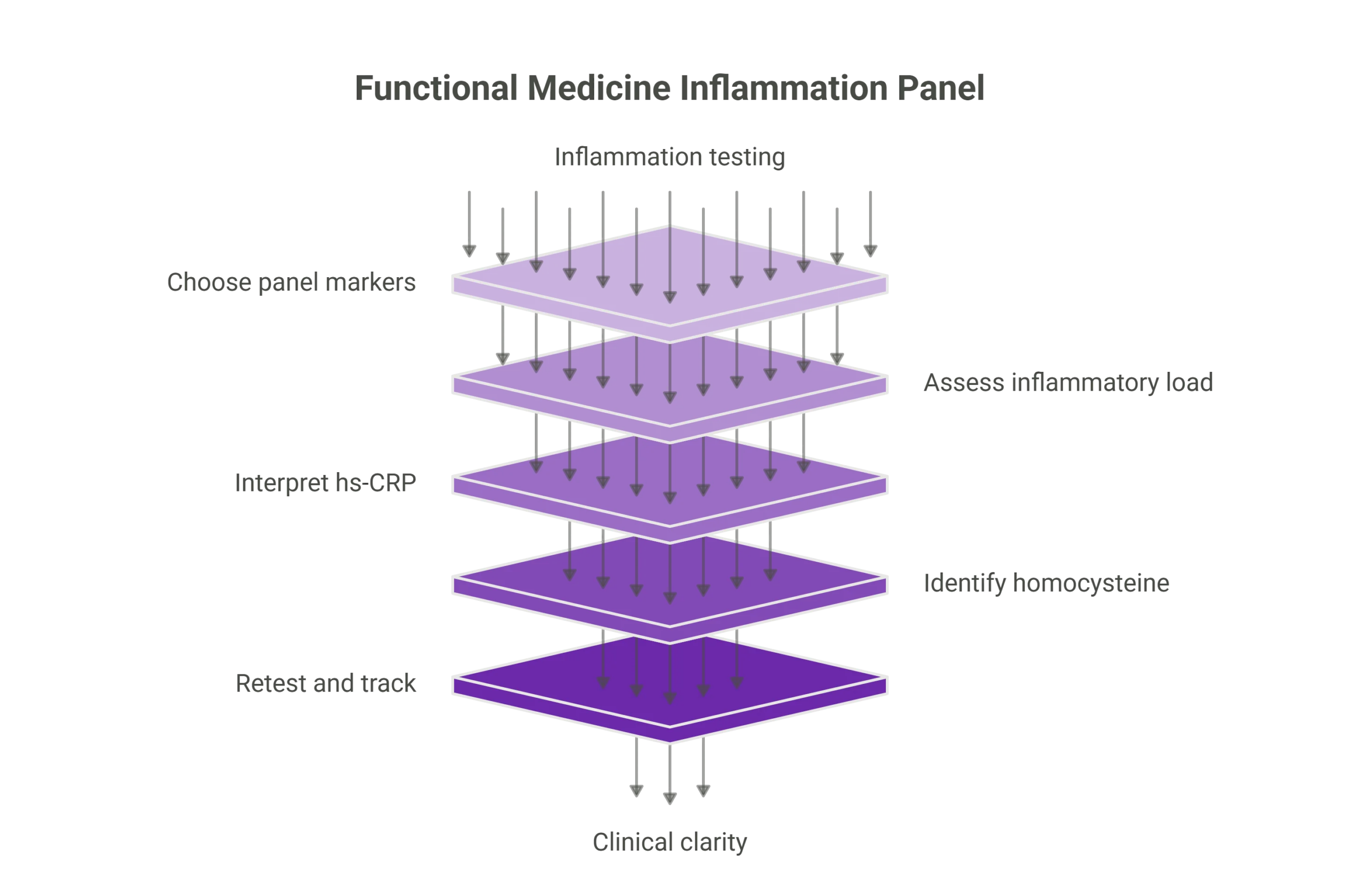
Chronic inflammation testing through a functional medicine lens looks meaningfully different from a standard draw. Rather than confirming whether something is acutely wrong, we’re asking how the body’s systems are functioning and where the inflammatory load is coming from. Each marker in our panel is chosen to answer a specific clinical question that standard bloodwork never gets to.
- High-sensitivity CRP (hs-CRP): Detects low-grade inflammation that standard CRP completely misses. An elevated hs-CRP test correlates with cardiovascular risk, metabolic dysfunction, and systemic immune activation even when a patient looks fine on a basic panel.
- Homocysteine: An amino acid whose elevation signals B-vitamin deficiency, cardiovascular risk, and neurological inflammation. It is rarely ordered in conventional care yet highly actionable because it responds well to targeted nutritional correction.
- Fasting insulin: One of the earliest markers of insulin resistance, which is itself a significant driver of inflammatory pathways. Fasting glucose can look normal for years while insulin is already elevated and metabolic inflammation is building.
- Fibrinogen: A clotting protein that rises with chronic systemic inflammation. It is associated with increased cardiovascular and stroke risk, giving us a different angle on inflammatory load than CRP alone.
- Ferritin: Standard reference ranges for ferritin are extremely broad. A result that looks normal in conventional medicine may actually indicate significant systemic inflammation when interpreted through a functional lens.
- Oxidized LDL: The standard lipid panel tells you how much LDL you’ve but does not tell you whether that LDL has been oxidized, which is the form that actually damages arterial walls and drives cardiovascular inflammation.
- Lp(a): A genetically determined cardiovascular risk marker that a basic lipid panel never includes yet significantly affects a patient’s actual cardiovascular risk picture.
- Advanced lipoprofile: Goes beyond a simple LDL number to evaluate particle size and particle number, which is far more relevant to inflammatory cardiovascular risk than total LDL alone.
- HbA1c: A three-month blood sugar average that connects to insulin resistance and metabolic inflammation. We include this as standard rather than leaving it to a once-in-a-while order.
- Omega-3 index: Measures the ratio of omega-3 to omega-6 fatty acids in cell membranes, reflecting the dietary inflammatory balance at a cellular level. Most patients have never had this measured.
Why hs-CRP Is a Better Starting Point Than Standard CRP
A standard CRP test is calibrated to detect levels above 10 mg/L, which is the range associated with acute infection, significant injury, or active inflammatory disease. This makes it a useful emergency tool but not a useful chronic disease screening tool because it simply cannot see what is happening at lower, sustained levels of immune activation. For anyone considering an hs-CRP test, the distinction matters because hs-CRP detects levels as low as 0.1 mg/L. That sensitivity opens up a clinically meaningful range where hs-CRP between 1 and 3 mg/L signals meaningfully elevated cardiovascular and metabolic risk that would return a completely normal result on a standard CRP test.
That 1 to 3 mg/L range is where a lot of our patients live, and their acute inflammation panel says normal while their hs-CRP says something different. This is the gap we’re working in, and it is why we use hs-CRP as a standard component of our inflammatory workup rather than an add-on.
Homocysteine: The Inflammation Marker Most Patients Have Never Heard Of
Homocysteine is an amino acid produced as a byproduct of protein metabolism. When B6, B12, and folate levels are adequate, the body converts it efficiently and levels stay low. But when those nutrients are deficient, homocysteine accumulates and begins to damage blood vessel walls, contribute to neurological inflammation, and increase the risk of cognitive decline through mechanisms that include endothelial dysfunction and oxidative stress. The reason this marker matters so much is that it is almost never ordered in conventional primary care despite being directly actionable because high homocysteine responds well to targeted B-vitamin supplementation. So we can identify it, address the nutritional root cause, retest, and track improvement in a way that gives patients the kind of clarity a standard panel never gets close to.
What’s Driving the Inflammation? Root Causes We Investigate
Finding elevated inflammatory markers is the beginning of the clinical conversation, not the end of it. The real question is always why the immune system is staying activated. This is where our functional medicine approach diverges most clearly from standard care.
Gut Dysbiosis and Intestinal Permeability
Gut dysbiosis and intestinal permeability are among the most common drivers we find. A compromised gut lining allows bacterial lipopolysaccharides and undigested proteins to enter systemic circulation and trigger ongoing innate immune activation. You can read more about how we evaluate this through gut health and systemic inflammation.
Hormonal Imbalances
Hormonal imbalances, including estrogen dominance, declining testosterone, and cortisol dysregulation, are another frequent contributor. These hormones regulate nuclear factor kappa-B signaling and other inflammatory transcription pathways. When they fall out of range, the immune system loses a key moderating influence. This is one reason perimenopausal women and men experiencing andropause so often develop new inflammatory symptoms. Our work with hormone imbalance and inflammation is central to how we address this.
Blood Sugar Instability and Insulin Resistance
Blood sugar instability and insulin resistance drive inflammatory pathways independently of diabetes.
Chronic Stress and Poor Sleep
Chronic stress and poor sleep sustain elevated cortisol that in turn promotes immune dysregulation.
Nutrient Deficiencies
Nutrient deficiencies in omega-3 fatty acids, magnesium, and vitamin D remove the raw materials the body uses to resolve inflammation.
Autoimmune Conditions
Autoimmune conditions and inflammation like Hashimoto’s thyroiditis represent a state where the immune system is already chronically activated. These root causes rarely appear alone, and most patients have two or three intersecting contributors. This is exactly why a systems-level investigation matters.
Standard Bloodwork vs. Functional Medicine Inflammation Testing: A Side-by-Side Look
One panel tells you whether something is acutely wrong; the other tells you how the body’s systems are actually functioning. This is not about ordering more tests for the sake of it, but about asking more specific clinical questions.
| Standard Primary Care Panel | Functional Medicine Inflammation Panel at Vibrant Health |
| Basic CRP (detects acute inflammation above 10 mg/L) | hs-CRP (detects low-grade inflammation from 0.1 mg/L) |
| Basic lipid panel (total cholesterol, LDL, HDL, triglycerides) | Advanced lipoprofile (particle size and particle number) |
| Homocysteine not ordered | Homocysteine (cardiovascular and neurological risk) |
| Fasting insulin not ordered | Fasting insulin (early metabolic and inflammatory marker) |
| Ferritin using broad standard range | Ferritin interpreted through functional reference ranges |
| Fibrinogen not ordered | Fibrinogen (clotting protein linked to systemic inflammation) |
| Lp(a) not ordered | Lp(a) (genetic cardiovascular risk marker) |
| Oxidized LDL not ordered | Oxidized LDL (arterial inflammation driver) |
| Omega-3 index not ordered | Omega-3 index (dietary inflammatory balance) |
| HbA1c ordered inconsistently | HbA1c included as standard |
How Vibrant Health’s Approach to Chronic Inflammation Testing Is Different
Vibrant Health of Colorado was built around one conviction: find the cause before reaching for a prescription. The clinical framework here is grounded in the same peer-reviewed research that informs conventional care. When we describe what makes this approach different from what patients have typically experienced, we’re direct about the fact that this is science-based, evidence-based medicine and not essential oils and wellness trends. It’s the way all medicine should be practiced with enough time and enough tools to actually answer the question of why. Our team in Lone Tree and Eagle brings certifications through the Institute for Functional Medicine alongside over 14 years of comprehensive primary care experience, specific clinical focus on cardiovascular health and autoimmune disease, and nutritional therapy training. So when we talk about inflammation testing that Colorado patients can access through a credentialed team, this is who we mean.
One of the most important things we offer is that patients do not have to choose between a functional medicine specialist and a primary care provider. What is interesting about our practice is that we offer both traditional western medicine and integrative care. Having that all in one place changes everything for patients who have been bouncing between practitioners. For primary care and functional medicine in one place, that integration means inflammation testing, follow-up care, hormone evaluation, and treatment adjustments all happen with one coordinated team who already knows your full picture. Patients get continuity of care rather than the fragmented experience of translating test results from one provider to another.
How to Reduce Chronic Inflammation: What Happens After the Test Results Come In
Testing is the beginning of a process. Once we’ve identified elevated markers and mapped the root causes driving them, we build a personalized plan. This genuinely means personalized, rather than a printed handout about anti-inflammatory foods, because what matters is what is causing your specific pattern of inflammation, and the interventions follow from that.
Targeted Nutritional Support
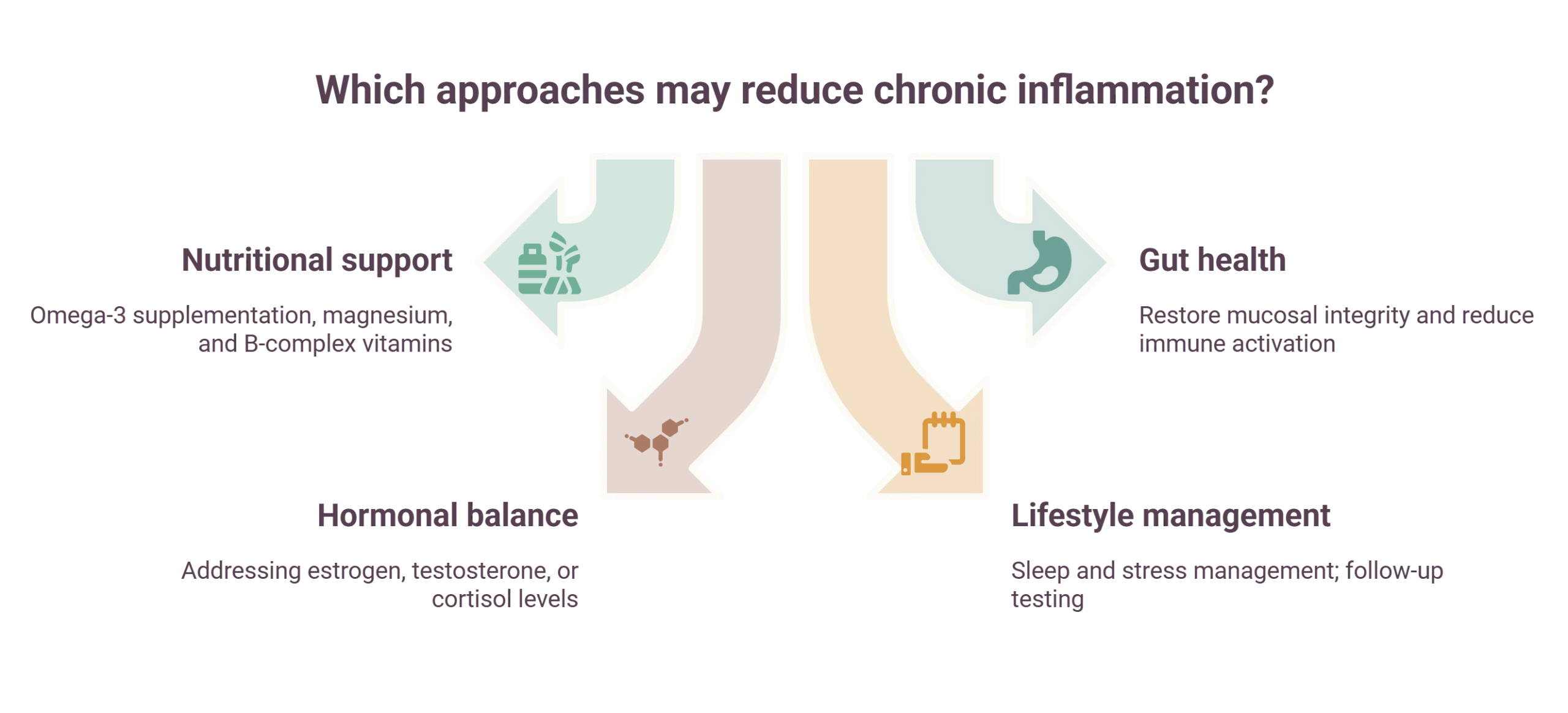
Depending on what the results show, a plan for how to reduce chronic inflammation might include targeted nutritional support such as omega-3 supplementation, magnesium, and B-complex vitamins to bring down elevated homocysteine, along with dietary changes to reduce inflammatory load from refined carbohydrates and pro-inflammatory fats, stabilize blood sugar, and lower fasting insulin. These changes often produce measurable movement in hs-CRP and metabolic markers within months.
Gut Health Protocols
Where gut dysbiosis or intestinal permeability is a contributing factor, we use specific protocols to restore mucosal integrity and reduce the immune activation coming from the GI tract.
Hormonal Balance
When hormonal imbalances are part of the picture, addressing estrogen, testosterone, or cortisol levels removes an ongoing inflammatory trigger that dietary changes alone cannot resolve because the immune-regulatory function of those hormones is a distinct pathway.
Lifestyle Management
Sleep and stress management are rarely optional add-ons in these plans because chronic elevated cortisol from sleep deprivation and unmanaged stress sustains the inflammatory state regardless of what else is done. Follow-up testing matters so that we see your markers move, retest to confirm what we’re doing is working, and adjust the plan from there. That coordinated, ongoing care is what this model is built to deliver.
Getting This Level of Testing in Colorado: The Membership Model
Standard insurance-driven primary care does not create the conditions for this kind of workup because a 15-minute visit with a dozen patients behind you does not allow time for an expanded inflammatory panel, a thorough history review, and a personalized interpretation of results. That is not a criticism of those providers, but rather the reality of how the system is structured. Our membership model is designed to remove those structural barriers. For approximately $225 per month, members get longer appointments, direct provider access, and wholesale lab pricing, all without the billing unpredictability that comes with traditional insurance-driven care. Other functional medicine practices in Colorado typically charge $500 to $2,000 per month for comparable access. So we built our model to make this level of care reachable without requiring patients to pay those rates.
In-person care is available at our Lone Tree clinic at 10099 RidgeGate Parkway, Suite 410, Lone Tree, CO 80124, phone 303-730-2229, and at our Eagle clinic serving the Vail Valley at 1143 Capitol St., #101A, Eagle, CO 81631, phone 970-525-2229. Patients across Colorado can also access this level of testing and care through statewide telehealth. To learn more about how the membership works and what is included, visit our homepage.
Frequently Asked Questions About Chronic Inflammation Testing
What is the difference between hs-CRP and regular CRP?
Standard CRP is calibrated to detect significant acute inflammation, typically at levels above 10 mg/L. It is useful for identifying acute infections and major inflammatory events but not for the lower-level sustained activation that drives chronic symptoms. High-sensitivity CRP measures levels as low as 0.1 mg/L, so a result that looks normal on standard CRP can show meaningfully elevated cardiovascular and metabolic risk on hs-CRP, which is why we use the high-sensitivity version as part of our standard functional medicine lab testing across Colorado.
Can chronic inflammation cause fatigue and brain fog?
Yes, and this is one of the most clinically important connections that standard care often misses. Chronic low-grade inflammation activates immune signaling pathways that directly affect brain function, energy regulation, and sleep quality through mechanisms including elevated interleukin-6, disrupted mitochondrial ATP production, and interference with serotonin and dopamine synthesis. When patients tell us their fatigue and brain fog started gradually and nothing showed up on their labs, we take that seriously as a reason to look deeper because the markers that would show this pattern simply were not ordered.
What blood tests check for chronic inflammation?
The markers most useful for evaluating chronic systemic inflammation include hs-CRP, homocysteine, fasting insulin, fibrinogen, ferritin interpreted through functional ranges, oxidized LDL, Lp(a), an advanced lipoprofile with particle size and number, HbA1c, and the omega-3 index. Standard panels typically do not include most of these because a functional medicine workup is specifically structured to ask the clinical questions a basic panel is not designed to answer.
How is functional medicine inflammation testing different from what my doctor orders?
Standard primary care testing is designed to rule out acute disease and monitor major organ function. Functional medicine inflammation testing is designed to identify how well the body’s systems are functioning and where the immune system may be chronically activated. The markers differ, the reference ranges used for interpretation differ, and the time spent reviewing results with the patient differs substantially. Functional medicine lab testing at Vibrant Health means results are interpreted in the context of your symptoms, history, and the full clinical picture rather than compared to a single broad reference range in isolation.
Does insurance cover advanced inflammation testing?
Coverage varies by plan and individual markers. Our membership model includes wholesale lab pricing which often makes the out-of-pocket cost for advanced testing lower than what members would pay after deductibles and co-pays. The membership is designed to give patients predictable, transparent costs without billing surprises.
Can I get functional medicine inflammation testing in Colorado via telehealth?
Yes, and we serve patients across all of Colorado through telehealth because lab draws can be coordinated locally and your results are reviewed with a Vibrant Health provider during a telehealth visit. Patients in the Denver metro area, the Vail Valley, and throughout Colorado can access this level of investigation without needing to travel to either clinic location, though both in-person clinics are also available for those who prefer them.
Ready to Find Out What’s Actually Driving Your Symptoms?
If you’ve been told your labs are normal but you’re still exhausted, foggy, or dealing with pain that has no clear explanation, the problem is not in your head and it may be in the tests that were ordered. Chronic inflammation is one of the most common and most routinely missed root causes of persistent symptoms, and finding it requires a different kind of workup than what conventional primary care typically provides. We’re here to do that workup. For those whose symptoms suggest cardiovascular risk alongside inflammation, our advanced cholesterol and cardiovascular testing is a natural extension of this same approach. Your symptoms deserve a real investigation, and that’s exactly what we provide. Patients across Colorado can schedule an appointment at our Lone Tree clinic located at 10099 RidgeGate Parkway, Suite 410 by calling 303-730-2229, or at our Eagle clinic serving the Vail Valley located at 1143 Capitol St., Suite 101A by calling 970-525-2229. Telehealth is available from anywhere in the state.

Deanna Woodroffe, WHNP, is the founder of Vibrant Health of Colorado and a passionate Women’s Health Nurse Practitioner with a focus on functional and integrative medicine. Early in her career, she became frustrated with the inability of traditional medicine to treat her patients’—and her own—chronic symptoms, driving her to pursue a fellowship in Anti-Aging and Functional Medicine. With over twenty years of experience, Deanna helps patients resolve complex, chronic symptoms by focusing on root causes and restoring balance to the body. Her comprehensive approach utilizes bio-identical hormone therapy, thyroid optimization, and addressing lifestyle factors like nutrition and stress to return her patients to feeling vibrant.



Leave a Reply
Want to join the discussion?Feel free to contribute!