
An Integrative, Functional Medicine Approach to Treating PCOS: Addressing Root Causes for Lasting Hormonal Balance
If you have been diagnosed with PCOS, or suspect something is not right with your hormones, you are not alone. Many people with PCOS spend years feeling confused, dismissed, or told that their symptoms are something they simply have to live with.
At Vibrant Health of Colorado, we take a different approach. We view PCOS as a complex, whole-body condition that deserves thoughtful, personalized care. Our goal is to help you understand what is happening in your body and to support meaningful, sustainable improvements in your health over time.
What Is PCOS, and Why It Looks Different for Every Person
Polycystic ovary syndrome, or PCOS, is often described as a reproductive condition. In reality, it is a complex endocrine and metabolic pattern that can affect multiple systems throughout the body.
While the name focuses on the ovaries, PCOS frequently involves blood sugar regulation, hormone signaling, inflammation, and stress physiology. This is why two people with the same diagnosis can experience very different symptoms, challenges, and health risks.
Some individuals are diagnosed early due to irregular cycles or fertility concerns. Others struggle for years with symptoms that do not immediately point to PCOS. Understanding this variability is essential. A one-size-fits-all approach rarely addresses the full picture.
PCOS Symptoms and Signs You Should Not Ignore
PCOS does not look the same for everyone. Symptoms may evolve over time and often extend beyond the menstrual cycle. Many people experience signs for years before receiving a clear diagnosis.
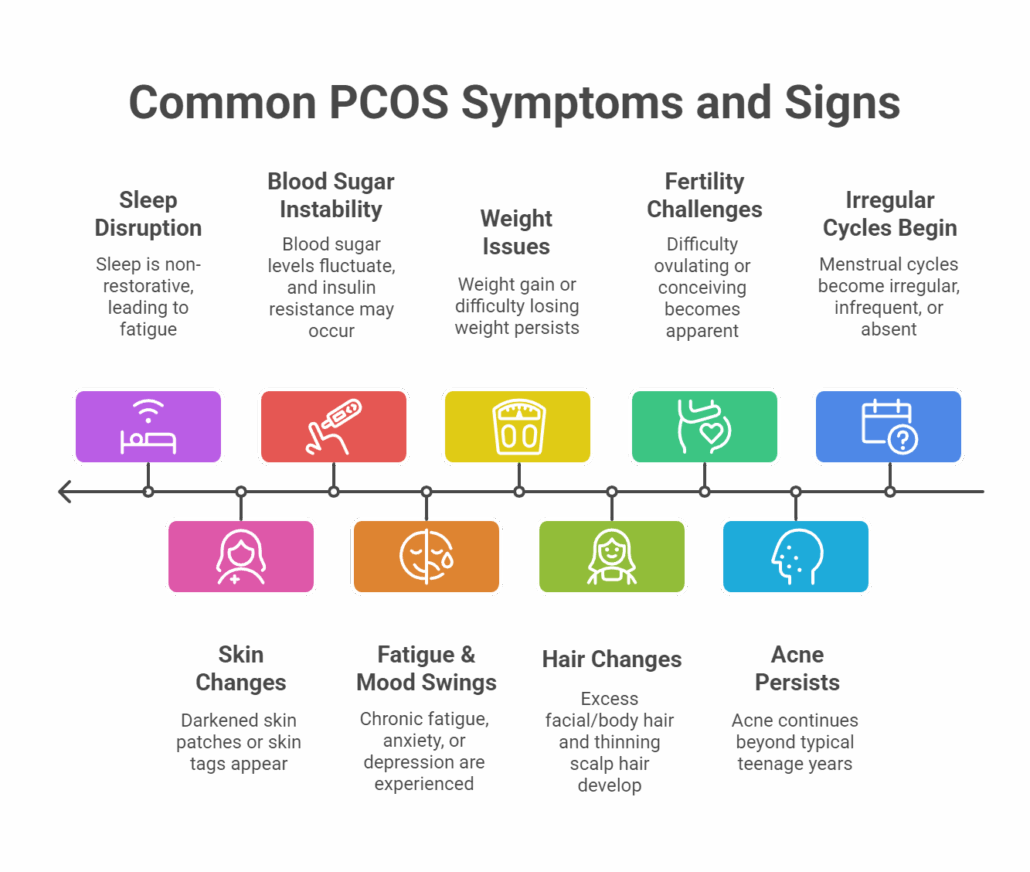
Common symptoms and signs of PCOS include:
- Irregular, infrequent, or absent menstrual cycles
- Difficulty ovulating or challenges with fertility
- Acne that persists beyond adolescence
- Excess facial or body hair growth
- Thinning hair or hair loss on the scalp
- Weight gain or difficulty losing weight despite lifestyle efforts
- Fatigue or chronically low energy
- Mood changes, anxiety, or depression
- Blood sugar instability or insulin resistance
- Skin changes such as darkened patches or skin tags
- Sleep disruption or non-restorative sleep
It is common for people with PCOS to be told their labs are normal or that these symptoms are unrelated. In reality, these signs often reflect underlying hormonal, metabolic, and inflammatory imbalances that deserve deeper evaluation.
Feeling unheard or minimized is one of the most consistent experiences we see in patients with PCOS.
Why Conventional PCOS Treatment Often Falls Short
Conventional care for PCOS often focuses on managing symptoms rather than addressing the underlying drivers of the condition. Many patients are prescribed medications to regulate cycles, reduce androgen-related symptoms, or support fertility, which can be appropriate in certain situations.
Common conventional treatments for PCOS may include hormonal birth control to regulate menstrual cycles or reduce acne and excess hair growth. Anti-androgen medications may be used to block the effects of elevated androgens. Metformin is sometimes prescribed to improve insulin sensitivity and manage blood sugar concerns. For individuals trying to conceive, medications such as letrozole may be used to support ovulation.
While these treatments can help manage specific symptoms or short-term goals, they often do not address why PCOS developed in the first place. Insulin resistance, inflammation, stress physiology, lifestyle factors, and metabolic health may remain unaddressed. As a result, symptoms may return when medications are stopped, or new concerns may emerge over time.
Many people with PCOS find themselves taking multiple medications without a clear understanding of how their body systems are connected. This can feel frustrating, especially when symptoms persist despite treatment.
A functional medicine approach does not replace conventional care. Instead, it broadens the lens. By looking at hormonal, metabolic, and lifestyle factors together, we aim to support more sustainable improvements while still respecting the role medications may play when they are clinically indicated.
A Root-Cause Functional Medicine Perspective on PCOS
From a functional medicine perspective, PCOS is not a single diagnosis with a single cause. It reflects how multiple systems in the body are interacting and, at times, struggling to stay in balance.
Instead of assigning rigid subtypes or following a standard protocol, we focus on understanding which systems are most contributing to symptoms for each individual. The goal is not perfection. The goal is restoring healthier hormone signaling, metabolic function, and overall resilience.
Common Root Drivers We Evaluate in PCOS
Insulin Resistance and Blood Sugar Dysregulation
- Insulin resistance plays a role in many cases of PCOS. When insulin levels remain elevated, ovarian hormone production can shift, contributing to increased androgen levels and disrupted ovulation. Supporting metabolic health is often foundational for improving symptoms and long-term outcomes.
Hormonal Imbalances Beyond the Ovaries
- PCOS is not only about the ovaries. Imbalances involving androgens, progesterone, estrogen, thyroid hormones, and adrenal hormones can all influence symptoms. Evaluating these systems together provides a clearer picture than focusing on one hormone in isolation.
Inflammation and Gut Health
- Low-grade, chronic inflammation can worsen insulin resistance and hormone imbalance. A functional approach to gut health and microbiomes plays a critical role in inflammation regulation, hormone metabolism, and immune balance. Digestive symptoms are common in PCOS, even when they are not always recognized as part of the condition.
Stress, Lifestyle, and Environmental Factors
- Chronic stress, poor sleep, overtraining, underfueling, and environmental exposures can all affect hormone signaling. This is never about blame. It is about understanding how real life impacts the body and identifying areas where support can reduce strain and improve regulation.
How We Evaluate PCOS at Vibrant Health
Care at Vibrant Health begins with listening. We take time to understand your health history, symptoms, goals, and previous experiences with care. This context is essential for meaningful evaluation.
When appropriate, we use targeted lab testing to assess hormone patterns, metabolic markers, inflammation, nutrient status, and related systems. We focus on trends, relationships, and clinical relevance rather than chasing isolated numbers.
The goal is clarity and direction, not overwhelm.
What a Functional Treatment Plan May Include
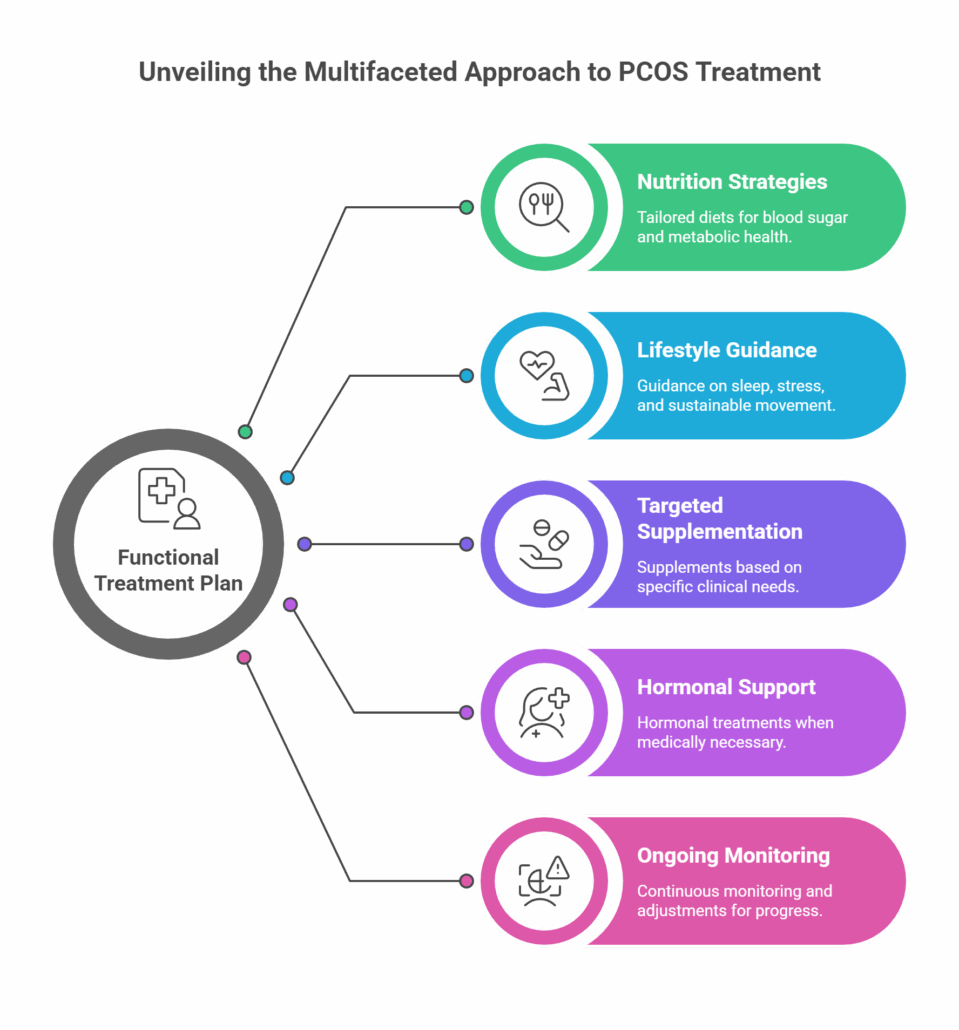
There is no single treatment plan that works for everyone with PCOS. Care is always individualized, but may include:
- Nutrition strategies that support blood sugar balance and metabolic health
- Lifestyle guidance focused on sleep, stress regulation, and sustainable movement
- Targeted supplementation when there is a clear clinical reason
- Hormonal support or medications when appropriate and medically indicated
- Ongoing monitoring and thoughtful adjustments over time
We avoid quick fixes and rigid protocols. Sustainable progress comes from personalized, well-supported care.
What Progress Can Look Like Over Time
Progress with PCOS often happens gradually. Many patients notice improvements such as more regular cycles, improved energy, better mood stability, clearer skin, or improved metabolic markers.
Just as importantly, a functional approach supports long-term health. PCOS is associated with increased cardiometabolic risk, and addressing underlying drivers helps protect health beyond symptom relief alone.
Who This Approach Is Best For
A functional medicine approach to PCOS is often a good fit for people who:
- Want to understand why their symptoms are happening
- Have tried symptom-based treatments without lasting relief
- Are open to a collaborative, long-term care relationship
- Value being listened to and treated as a whole person
This approach is not right for everyone, and we are always honest about what we can and cannot support.
Why Patients Choose Vibrant Health for PCOS Care
Patients choose Vibrant Health because we integrate functional medicine with women’s health and comprehensive primary care in one practice. Our team brings deep clinical experience, compassionate care, and a commitment to helping patients feel truly heard.
We serve patients across Colorado through our clinics in Lone Tree and Eagle, with telehealth options available when appropriate. Many patients come to us after years of frustration and tell us this is the first place they felt understood.
Taking the Next Step Toward PCOS Care in Colorado
If you are looking for functional medicine PCOS care in Colorado, Vibrant Health offers an integrative approach grounded in clinical expertise, compassion, and long-term partnership.
Your initial consultation is designed to provide clarity. We listen carefully, review your history, and help you understand what may be contributing to your symptoms so you can make informed decisions about next steps.
We welcome patients at our Lone Tree and Eagle clinics, and offer telehealth for patients across Colorado when appropriate.
Scheduling a consultation is a meaningful place to begin.
Frequently Asked Questions About PCOS and Functional Medicine
What are the most common symptoms of PCOS?
Common symptoms include irregular or absent periods, acne, excess facial or body hair, thinning hair on the scalp, weight gain or difficulty losing weight, fatigue, mood changes, and fertility challenges. Not everyone experiences the same symptoms, and severity can vary over time.
What causes PCOS?
PCOS does not have a single cause. It is influenced by insulin resistance, hormone imbalances, inflammation, genetics, stress physiology, and lifestyle factors. Functional medicine focuses on identifying which of these drivers are most relevant for each individual.
Can PCOS be treated without birth control?
In some cases, yes. Birth control can help manage symptoms for some individuals, but it does not address underlying drivers. A functional medicine approach focuses on improving hormone signaling and metabolic health, with medications used thoughtfully when appropriate.
Can functional medicine help with PCOS-related weight gain?
Weight changes in PCOS are often related to insulin resistance and hormonal imbalance rather than lack of effort. Addressing these underlying factors can make weight management more achievable and sustainable.
What lab tests are used to evaluate PCOS?
Testing varies based on symptoms and history, but may include hormone patterns, insulin and blood sugar markers, inflammatory markers, thyroid function, and nutrient status. The goal is targeted testing that provides meaningful insight.
How long does it take to see improvement with a functional approach to PCOS?
Timelines vary. Some patients notice improvements within a few months, while others experience more gradual changes. Functional medicine prioritizes sustainable progress and long-term health rather than quick fixes.
Is PCOS something I will have forever?
PCOS is considered a chronic condition, but symptoms and health risks can often be significantly improved when underlying drivers are addressed. Many people experience meaningful improvements in quality of life with personalized care.
Do I need to live near your clinic to receive PCOS care?
Vibrant Health sees patients in person at our Lone Tree and Eagle clinics. Telehealth options are available for patients throughout Colorado when clinically appropriate.
Is functional medicine PCOS care right for me?
This approach is often a good fit for individuals who want deeper answers, have not found lasting relief with symptom-based care, and are open to a collaborative, long-term approach. A consultation helps determine fit and next steps.



Leave a Reply
Want to join the discussion?Feel free to contribute!