

How Targeted Peptides Help You Heal, Age Better, and Thrive
At Vibrant Health of Colorado, we view peptide therapy as a targeted, medically guided tool that can support healing, resilience, and healthy aging when used appropriately. Peptides are not a shortcut, a trend, or a stand-alone solution. Instead, they are one option within a personalized functional medicine plan designed to address root causes and support the body’s natural ability to restore balance.
For many patients, peptide therapy becomes part of the conversation after years of feeling unheard or after trying conventional treatments that addressed symptoms without explaining why those symptoms were happening. Our role is to provide clarity, education, and thoughtful guidance so peptide therapy is used safely, ethically, and in a way that aligns with long-term health.
Why Peptide Therapy Is Gaining Momentum in Functional Medicine
Interest in peptide therapy has grown as more patients seek care that goes beyond symptom suppression. Many people are frustrated with healthcare experiences that feel rushed, fragmented, or overly reactive. They want answers, context, and solutions that support how the body actually functions over time.
Several broader trends are driving this momentum:
- A shift toward root-cause and regenerative approaches rather than short-term symptom management
- Increased focus on healthy aging, longevity, and prevention instead of waiting for disease to develop
- Growing awareness of metabolic health, inflammation, and hormone balance as drivers of chronic symptoms
- Demand for personalized, relationship-based care rather than one-size-fits-all protocols
Peptide therapy fits naturally within functional medicine because it focuses on restoring communication within the body. Rather than blocking pathways or forcing outcomes, peptides help guide physiological processes that may have become less efficient due to stress, aging, illness, or long-standing imbalance.
Functional medicine providers like Vibrant Health are uniquely positioned to offer peptide therapy safely and effectively. We combine medical oversight, advanced diagnostics, extended visits, and ongoing monitoring. This allows peptides to be used with intention, restraint, and clinical clarity, rather than as a trendy add-on or standalone treatment.
What Peptides Are
A Simple, Science-Based Explanation
Peptides are short chains of amino acids. Amino acids are the building blocks of proteins, but peptides themselves function primarily as biological messengers. They help cells communicate with one another and influence how different systems respond to stress, injury, and change.
Throughout the body, peptides play a role in regulating essential functions, including:
- Hormone signaling and regulation
- Immune system communication
- Tissue repair and regeneration
- Brain and nervous system activity
- Metabolism and energy balance
Because of this role, peptides are often referred to as the body’s instructional or signaling molecules. Rather than forcing the body to behave a certain way, peptides help deliver information that supports more efficient and balanced function.
It is also helpful to understand how peptides differ from other commonly discussed therapies:
- Proteins are longer chains of amino acids that serve structural or functional roles in the body
- Hormones are chemical messengers released into the bloodstream to regulate specific processes
- Peptides act locally and systemically to support communication between cells and systems
This signaling role is one of the reasons peptides are often explored within functional medicine, where restoring communication between systems is a central goal.
Why Peptide Signaling Declines With Age, and Why That Matters
As part of the natural aging process, peptide production and signaling gradually decline. While this is expected, reduced signaling can contribute to a wide range of symptoms that many people begin to notice in midlife and beyond.
Common experiences associated with declining peptide signaling include:
- Persistent fatigue or reduced stamina
- Difficulty maintaining a healthy weight
- Slower healing and longer recovery times
- Shifts in hormone balance
- Cognitive changes such as brain fog or reduced focus
- Changes in skin elasticity, hair density, joints, and connective tissue
From a functional medicine perspective, these changes often reflect a gradual breakdown in communication between systems rather than a single isolated problem. The goal of peptide therapy is not to override the body or artificially push it beyond its capacity. Instead, peptides are used to support clearer communication so natural repair, regulation, and adaptation processes can function more effectively.
What Peptide Therapy Is and How It Works in a Functional Health Setting
Peptide therapy involves the targeted use of peptides that are naturally found in the human body. These peptides are selected based on an individual’s symptoms, health goals, lab findings, and overall physiology.
In a functional medicine setting, peptide therapy is highly individualized. It is never a one-size-fits-all protocol and is not used in isolation. Instead, peptides are considered as part of a broader plan that may also address:
- Hormone balance
- Metabolic health
- Gut function
- Stress response and sleep quality
- Nutrition and lifestyle factors
This approach differs meaningfully from conventional models. Prescription medications often block or suppress pathways to reduce symptoms. Hormone therapy alone replaces levels but does not address signaling between systems. Oral supplements may provide raw materials but do not always reach specific receptors effectively.
Peptides interact with targeted receptors in the body, triggering responses related to healing, regulation, or adaptation. This precision is what makes peptide therapy appealing within a functional framework, where the goal is to support the body’s own capacity to heal.
Why Peptide Injections Are Commonly Used
Peptides are most commonly administered through injections because this delivery method allows for greater precision and reliability. Many peptides are broken down in the digestive tract if taken orally, which limits their effectiveness.
Injectable peptides offer several advantages:
- Higher and more predictable bioavailability
- More precise and consistent dosing
- Lower doses with targeted effects
- Reduced variability in absorption
Most peptide injections are given subcutaneously, just under the skin. When prescribed and monitored by licensed medical providers, this method is generally safe, well tolerated, and easy to manage as part of a structured care plan.
Core Ways Peptide Therapy Is Used
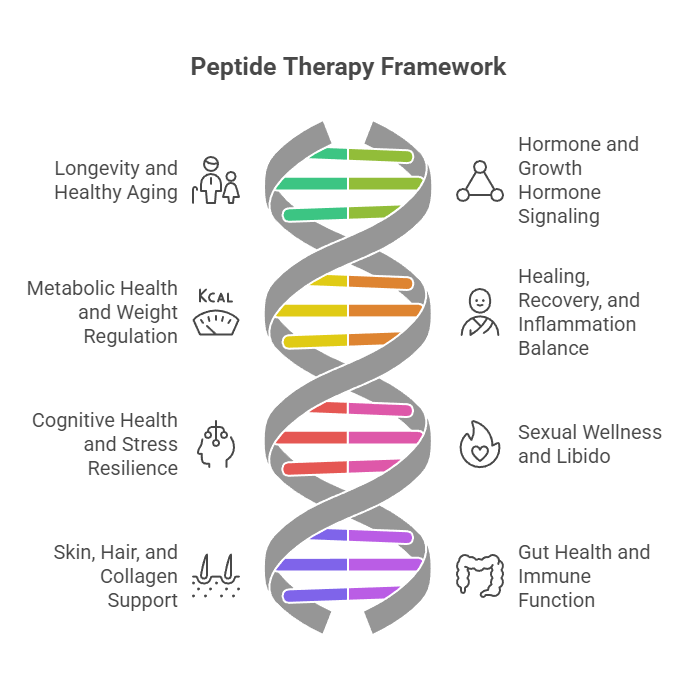
Rather than focusing on long lists of individual peptides, it is more helpful to understand peptide therapy through the outcomes it is designed to support. In clinical practice, peptides are often grouped by functional goals rather than brand names or trends.
Broad areas of support include:
- Longevity and healthy aging
- Hormone and growth hormone signaling
- Metabolic health and weight regulation
- Healing, recovery, and inflammation balance
- Cognitive health and stress resilience
- Sexual wellness and libido
- Skin, hair, and collagen support
- Gut health and immune function
This outcome-driven framework allows care plans to evolve as research advances and as a patient’s needs change over time, without locking therapy into rigid or outdated protocols.
Supporting Growth Hormone Signaling Naturally
Certain peptides are used to support the body’s natural growth hormone signaling through the pituitary gland. This approach differs from synthetic human growth hormone, which introduces external hormone levels and may suppress natural production.
Supporting growth hormone signaling may help with:
- Maintaining lean muscle mass
- Supporting fat metabolism
- Preserving bone density
- Improving recovery and physical resilience
- Supporting energy and overall vitality
Patients may opt for a peptide-based approach versus hormone replacement therapy because peptides work with the body’s regulatory systems rather than overriding them, which aligns more closely with long-term health goals.
Healing, Recovery, and Inflammation Support
Some peptides are used to support tissue repair and help regulate inflammation. These approaches are often explored by active adults, individuals recovering from injury or surgery, and patients with chronic inflammatory concerns.
From a functional medicine perspective, peptides are not meant to replace foundational elements such as proper nutrition, movement, and rest. Instead, they may help create a more supportive internal environment for healing when those foundational factors are addressed.
Peptides for Metabolic Health and Weight Support
Metabolic peptides influence how the body regulates appetite, insulin sensitivity, and fat metabolism. When used appropriately, they can support sustainable weight management as part of a comprehensive metabolic strategy.
This approach may be particularly helpful for individuals experiencing:
- Hormone-related weight gain
- Perimenopause or menopause transitions
- Insulin resistance or metabolic inflexibility
At Vibrant Health, peptide-supported weight care is never about rapid or restrictive dieting. It is approached within the context of hormone balance, stress regulation, sleep quality, gut health, and lifestyle, with the goal of long-term metabolic resilience.
Cognitive Health, Stress Resilience, and Brain Support
Certain peptides are explored for their potential role in supporting brain health by influencing inflammation, oxidative stress, and neural signaling. These therapies often appeal to individuals experiencing burnout, brain fog, or concerns about cognitive longevity.
Brain health is deeply connected to metabolic, hormonal, and gut health. For this reason, peptides are considered only as one component of a broader, systems-based approach to cognitive support.
Sexual Wellness and Libido Support for Men and Women
Some peptides influence central nervous system signaling related to desire, arousal, and confidence. These effects are not limited to blood flow alone and may support sexual wellness for both men and women.
This inclusive, whole-system approach aligns closely with Vibrant Health’s expertise in women’s health and hormone optimization across the lifespan.
Skin, Hair, and Collagen Support From the Inside Out
Peptides may support internal processes related to collagen production, circulation, and tissue repair. Rather than focusing only on cosmetic outcomes, peptide therapy addresses skin and hair health as part of overall physiological balance.
Support may include improvements in skin elasticity, hair density, and scalp health. While early intervention can be helpful, meaningful benefits may still be possible later in life when peptides are used thoughtfully.
Gut Health, Immune Balance, and Systemic Wellness
The gut plays a central role in immunity, inflammation, hormone balance, and mental health. Some peptides are used to support gut lining integrity and immune signaling.
In functional medicine, a functional approach to gut health and the microbiome is often foundational. Peptides are typically considered only after core imbalances are identified and addressed, reinforcing the importance of a stepwise, root-cause approach.
What to Expect From Peptide Therapy at Vibrant Health of Colorado
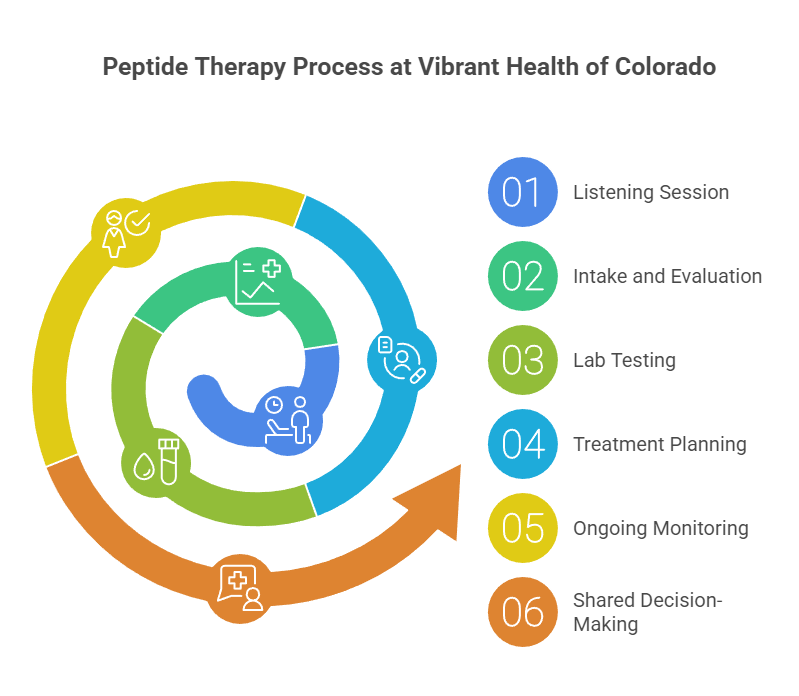
Our process begins with listening. Our team of Denver functional medicine providers takes the time to understand your full health history, symptoms, and goals before recommending any therapy.
Care typically includes:
- A comprehensive intake and clinical evaluation
- Targeted lab testing when appropriate
- Personalized treatment planning
- Ongoing monitoring and thoughtful adjustments
Our membership-based model allows time for education, follow-up, and shared decision-making, so patients feel informed and supported throughout their care.
Safety, Regulation, and Medical Oversight
Peptide therapy should always be prescribed and monitored by licensed medical providers. Safety depends on appropriate sourcing, dosing, and lab monitoring, as well as an understanding of individual health history.
Some peptides are FDA approved for specific uses, while others are prescribed off label. Transparency, education, and medical oversight are essential. Peptides should never be used without professional guidance.

Who May Be a Good Candidate for Peptide Therapy
Peptide therapy may be appropriate for:
- Men and women experiencing hormonal shifts
- Patients struggling with fatigue, weight gain, or brain fog
- Individuals focused on longevity and prevention
- Those recovering from injury or chronic inflammation
- People seeking personalized, evidence-based care
Peptides are not appropriate for everyone, and they are never the first step for every patient.
Why Choose Vibrant Health for Peptide Therapy in Denver
Vibrant Health brings together functional medicine, comprehensive primary care, gynecology and women’s health, hormone optimization, and more functional health services in one trusted practice. With clinics in Lone Tree along Denver’s Front Range, and in Eagle in the Vail Valley, we utilize functional medicine to focus on root causes to improve health rather than using prescriptions to treat symptoms. With a focus on long-term partnerships and a membership-based care model, our patients feel truly heard.
Your Next Step Toward Living a More Vibrant Life
We believe in education-first, pressure-free care. If you are curious whether peptide therapy may support your health goals, we invite you to schedule a consultation.
Together, we can explore a thoughtful, personalized plan designed to restore balance, address root causes, and help you heal, age better, and thrive.

Deanna Woodroffe, WHNP, is the founder of Vibrant Health of Colorado and a passionate Women’s Health Nurse Practitioner with a focus on functional and integrative medicine. Early in her career, she became frustrated with the inability of traditional medicine to treat her patients’—and her own—chronic symptoms, driving her to pursue a fellowship in Anti-Aging and Functional Medicine. With over twenty years of experience, Deanna helps patients resolve complex, chronic symptoms by focusing on root causes and restoring balance to the body. Her comprehensive approach utilizes bio-identical hormone therapy, thyroid optimization, and addressing lifestyle factors like nutrition and stress to return her patients to feeling vibrant.