

Testosterone Pellet Therapy for Men: A Root-Cause Approach to Energy, Strength, and Vitality
Testosterone plays a foundational role in how men feel, think, and function. When levels decline, the changes are often subtle at first. Energy dips. Motivation fades. Workouts feel harder. Focus is not as sharp. Mood may shift in ways that are difficult to explain.
For some men, testosterone pellet therapy offers a steady, reliable form of bioidentical hormone treatment for men. But hormone optimization should never begin with a prescription alone. It should begin with a careful evaluation.
At Vibrant Health of Colorado, we approach testosterone pellet therapy through a root-cause lens. That means we evaluate symptoms, lab results, lifestyle factors, metabolic health, and long-term risks before recommending treatment. When testosterone pellets for men are appropriate, they can restore energy, strength, clarity, and vitality in a safe and sustainable way.

Why Testosterone Matters More Than Most Men Realize
Most people associate testosterone with libido or muscle mass. While those are important, testosterone influences far more than physical performance.
Healthy testosterone levels support:
- Lean muscle mass and strength
- Energy production and stamina
- Motivation and drive
- Cognitive clarity and focus
- Mood stability
- Bone density
- Metabolic health and body composition
When levels decline, men may notice fatigue, difficulty building muscle, increased body fat, irritability, or a sense that they are not performing at their usual level. Some assume this is simply aging. Sometimes it is. Sometimes it is not.
True testosterone deficiency, known as hypogonadism, must be confirmed through appropriate blood testing. Symptoms alone are not enough. A thoughtful evaluation helps distinguish between hormonal imbalance and other causes such as thyroid dysfunction, sleep apnea, chronic stress, insulin resistance, or medication effects.
This is where a root-cause approach becomes essential.
What Is Testosterone Pellet Therapy?
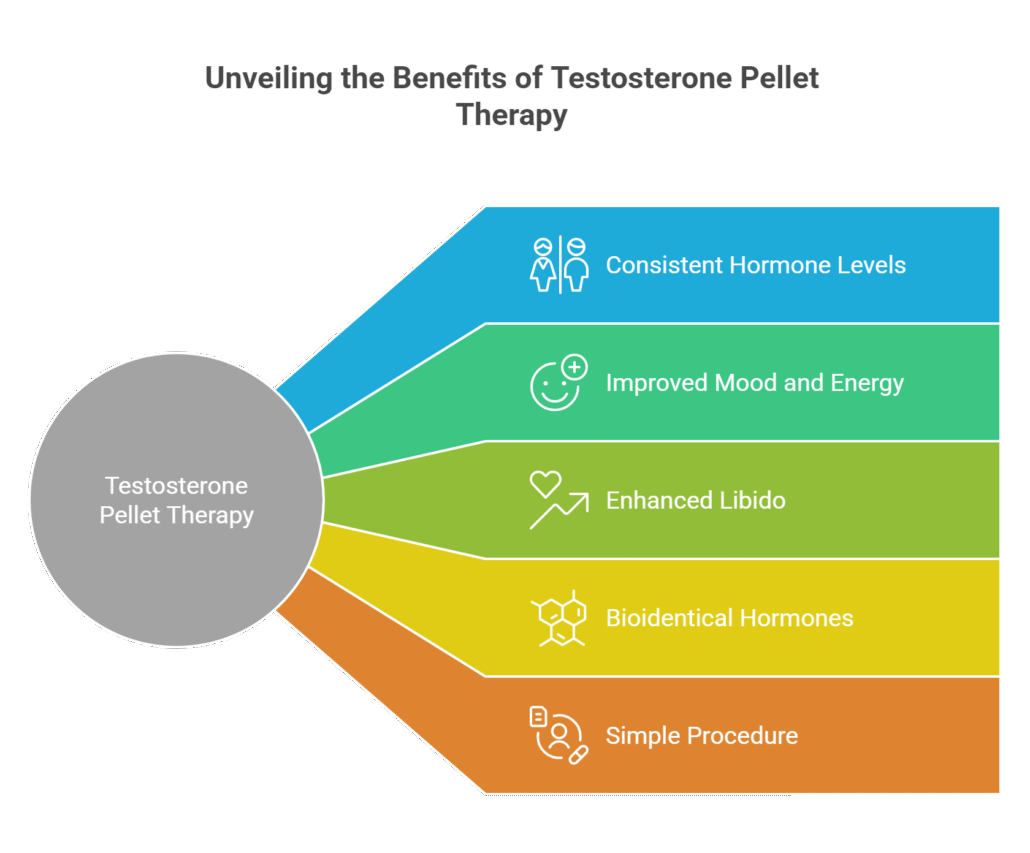
Testosterone pellet therapy is a form of testosterone replacement therapy pellets that provides a steady release of bioidentical testosterone over time.
How Testosterone Pellets Work
Testosterone pellets are small, rice-sized implants placed just beneath the skin, typically in the upper hip area. Once inserted, they gradually release testosterone into the bloodstream over a period of approximately three to six months.
Unlike testosterone pellets injections, which create hormonal peaks and troughs between doses, pellets provide a more consistent hormone level. Many men prefer this stability because it can reduce fluctuations in mood, energy, and libido.
The hormone used in pellet therapy is molecularly identical to the testosterone your body naturally produces. This is what we mean when we refer to bioidentical hormones for males.
The In-Office Procedure
The procedure itself is straightforward. After numbing the area with local anesthesia, a small incision is made and the testosterone pellets implant is placed beneath the skin. The incision is then closed with a small bandage or suture.
Most men return to normal daily activities within a day or two, with only minor soreness at the insertion site.
Pellets are not injections. They are implants designed to release hormones gradually, which is an important distinction for patients researching testosterone pellets injections online.
Is Testosterone Pellet Therapy Right for You?
Not every man with low energy needs hormone replacement pellets for men. The decision should always begin with a thorough hormone optimization evaluation and plan.
Symptoms That May Suggest Low Testosterone
Men who benefit from testosterone pellet therapy often report:
- Persistent fatigue
- Reduced strength or endurance
- Decreased libido
- Mood changes or irritability
- Brain fog or difficulty concentrating
- Loss of muscle mass
- Increased body fat
These symptoms deserve attention. However, they are not specific to testosterone alone.
Why Symptoms Alone Are Not Enough
Before initiating bioidentical hormone treatment for men, we confirm low testosterone through appropriate lab testing. This typically includes morning total testosterone levels and often free testosterone levels. Depending on the clinical picture, additional labs may include thyroid testing, metabolic markers, and evaluation of other hormone pathways.
We also assess:
- Sleep quality and possible sleep apnea
- Stress levels
- Weight and insulin resistance
- Alcohol intake
- Medications that may suppress testosterone
If underlying contributors are identified, those may need to be addressed alongside or even before testosterone therapy.
This careful process reflects our team’s commitment to treating the whole person, not just a number on a lab report.

Testosterone Pellets vs Injections, Gels, and Creams
Men considering testosterone replacement therapy pellets often ask how they compare to other delivery methods.
Pellets vs Testosterone Injections
Testosterone injections are typically administered weekly or biweekly. They are effective, but they can create noticeable fluctuations in hormone levels. Some men feel a surge of energy shortly after injection followed by a dip before the next dose.
Testosterone pellets for men provide a steadier release. This stability can support more consistent energy and mood. Pellets also eliminate the need for frequent injections.
Pellets vs Topical Creams and Gels
Topical testosterone creams and gels are applied daily. Absorption can vary depending on skin type and application technique. There is also potential risk of transferring medication to partners or children through skin contact.
Pellets offer convenience. Once inserted, there is no daily dosing to remember. However, pellets are not ideal for every patient. The best choice depends on lifestyle, medical history, and personal preference.
Our role is to help you understand these options clearly so you can make an informed decision.
Safety, Risks, and Monitoring
Any form of hormone therapy requires thoughtful oversight. Testosterone pellet therapy is no exception.
Potential Side Effects
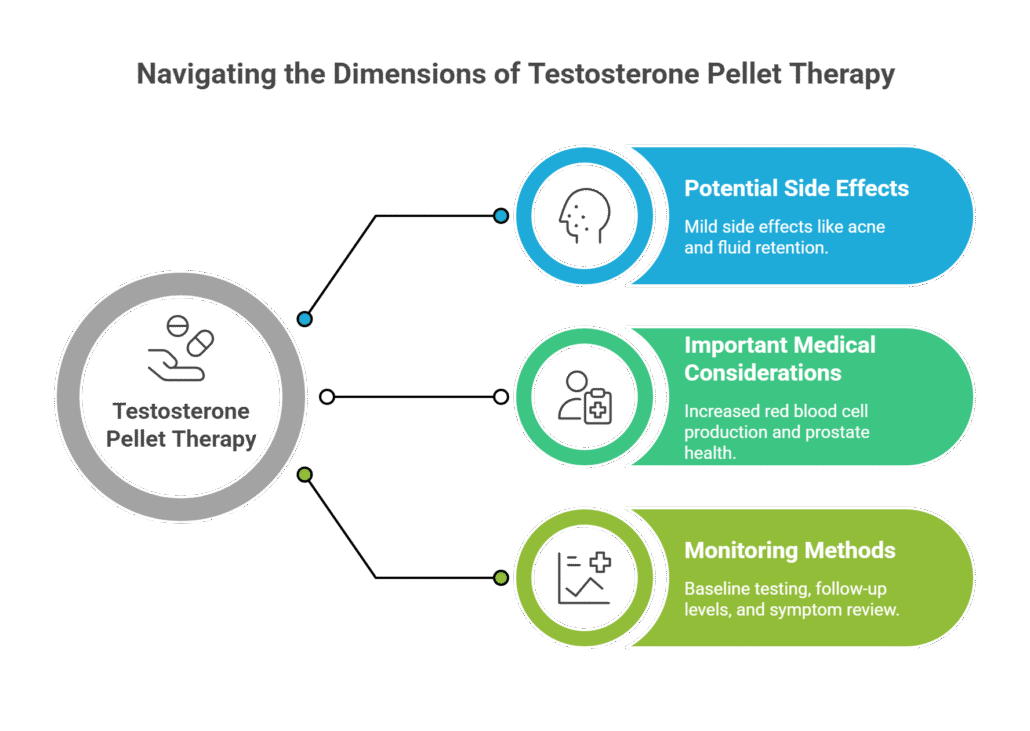
Common side effects may include:
- Mild acne
- Temporary fluid retention
- Local soreness at the insertion site
- Rare pellet extrusion
These are generally manageable and often mild. However, more important considerations involve long-term monitoring.
Important Medical Considerations
Testosterone therapy can increase red blood cell production. If levels rise too high, a condition called polycythemia may occur. This is why routine blood work is essential.
We also monitor:
- Prostate health, including PSA when appropriate
- Cardiovascular risk factors
- Blood pressure
- Sleep apnea symptoms
There has been public debate about testosterone and cardiovascular risk. Current evidence suggests that when testosterone therapy is appropriately prescribed and monitored in men with true deficiency, it can be safe. However, careful patient selection is critical.
How We Monitor Testosterone Therapy
Safe testosterone replacement therapy pellets require:
- Baseline lab testing
- Follow-up testosterone levels
- Complete blood count to monitor hematocrit
- Periodic prostate screening when indicated
- Ongoing symptom review
Because we integrate functional medicine with comprehensive primary care, monitoring is coordinated and comprehensive. Hormone optimization does not occur in isolation. It is part of your overall health plan.
What Results Can Men Expect and When?
Many men notice improvements in energy and mental clarity within the first few weeks after pellet insertion. Libido and mood changes may also begin early.
Changes in muscle mass and body composition typically develop more gradually. Consistent exercise and nutrition amplify these effects. Testosterone supports strength. It does not replace effort.
Pellets usually last three to six months. The exact duration varies depending on metabolism, body composition, and individual response. As levels decline toward the end of a cycle, some men notice subtle return of symptoms, which helps guide timing for reinsertion.
It is important to understand that testosterone pellet therapy is not a quick fix. It is one component of a broader health strategy.
The Role of Bioidentical Hormone Treatment for Men
The term bioidentical hormones for males often causes confusion. Bioidentical simply means the hormone molecule is chemically identical to what your body naturally produces.
It does not automatically mean safer or more natural. Safety depends on dosing, quality, and monitoring.
Some bioidentical formulations are compounded. Compounded medications are prepared by specialized pharmacies and are not individually approved by the FDA in the same way as mass-produced drugs. That does not make them unsafe, but it does mean quality control and physician oversight are essential.
When we use bioidentical hormone treatment for men, we focus on precision, appropriate dosing, and ongoing evaluation.
Clear communication about what bioidentical means helps patients avoid marketing-driven misunderstandings.
Why a Root-Cause Approach Matters
Many clinics focus exclusively on testosterone numbers. If levels are low, they prescribe. That approach can miss the bigger picture.
Low testosterone can be influenced by:
- Chronic sleep deprivation
- Untreated sleep apnea
- Obesity and insulin resistance
- Chronic stress
- Excess alcohol use
- Thyroid dysfunction
Addressing these factors may improve hormone levels naturally or enhance response to therapy.
At Vibrant Health, testosterone pellet therapy is delivered within a comprehensive care model. We combine functional medicine and primary care so that hormone optimization supports long-term metabolic and cardiovascular health.
This integrated approach allows us to evaluate cholesterol, blood pressure, inflammation, and other risk factors alongside hormone therapy. Our goal is not simply higher testosterone. Our goal is improved vitality and sustainable health.

Ready to Explore Testosterone Pellet Therapy?
If you suspect low testosterone may be affecting your energy, strength, mood, or clarity, the next step is not treatment. It is evaluation.
At Vibrant Health of Colorado, we take the time to understand your full health picture before recommending bioidentical hormone treatment for men. That includes comprehensive lab testing, a discussion of your symptoms and goals, and a review of lifestyle and metabolic factors that may be contributing to how you feel.
If testosterone pellet therapy is appropriate, we will build a personalized plan that prioritizes safety, monitoring, and long-term health.
Schedule a consultation at our Lone Tree clinic, our Eagle office in the Vail Valley, or connect with us through telehealth anywhere in Colorado. We are here to help you move forward with clarity and confidence.
Frequently Asked Questions About Testosterone Pellet Therapy for Men
1. How long do testosterone pellets last?
Most testosterone pellets for men last between three and six months. The exact duration depends on your metabolism, body composition, activity level, and individual response. As hormone levels gradually decline near the end of the cycle, some men notice subtle return of symptoms, which helps guide timing for reinsertion.
2. Are testosterone pellets better than injections?
Testosterone pellets and injections are both effective forms of testosterone replacement therapy pellets. The main difference is delivery.
Injections are typically given weekly or biweekly and can create hormonal peaks and dips. Pellets provide a steadier release over several months. Some men prefer the convenience and stability of pellets, while others prefer the flexibility of injections. The best option depends on your lifestyle, medical history, and treatment goals.
3. What is the difference between testosterone pellets and testosterone pellets injections?
This is a common point of confusion. Testosterone pellets are not injections. They are small implants placed beneath the skin during a brief in-office procedure. Once inserted, they release testosterone gradually over time.
Injections involve delivering testosterone directly into muscle on a regular schedule. Both methods can be effective, but they work differently.
4. Is bioidentical hormone treatment for men safe?
Bioidentical hormones for males are chemically identical to the testosterone your body naturally produces. Safety depends on appropriate dosing, patient selection, and ongoing monitoring.
Before starting therapy, we confirm true testosterone deficiency through lab testing. During treatment, we monitor blood counts, hormone levels, and other health markers. When prescribed responsibly and followed closely, testosterone pellet therapy can be a safe and effective option for the right patient.
5. What are the risks of testosterone pellet therapy?
Potential risks include acne, mild fluid retention, temporary soreness at the insertion site, and rare pellet extrusion. More importantly, testosterone therapy can increase red blood cell counts, which is why regular lab monitoring is essential.
We also monitor prostate health and cardiovascular risk factors as part of a comprehensive care plan. Careful oversight is what makes hormone therapy both effective and responsible.
6. How soon will I notice results?
Many men begin to notice improvements in energy, focus, or libido within the first few weeks. Changes in strength, muscle mass, and body composition typically develop more gradually and are influenced by exercise and nutrition habits.
Hormone optimization is a process. We focus on steady, sustainable improvement rather than dramatic short-term shifts.
7. Who should not consider testosterone pellet therapy?
Testosterone pellet therapy is not appropriate for every man. Those with untreated prostate cancer, certain elevated blood counts, uncontrolled sleep apnea, or specific cardiovascular concerns may not be good candidates.
This is why a thorough medical evaluation is always the first step. Our goal is to determine whether hormone replacement pellets for men are appropriate for you, not to prescribe them automatically.

Deanna Woodroffe, WHNP, is the founder of Vibrant Health of Colorado and a passionate Women’s Health Nurse Practitioner with a focus on functional and integrative medicine. Early in her career, she became frustrated with the inability of traditional medicine to treat her patients’—and her own—chronic symptoms, driving her to pursue a fellowship in Anti-Aging and Functional Medicine. With over twenty years of experience, Deanna helps patients resolve complex, chronic symptoms by focusing on root causes and restoring balance to the body. Her comprehensive approach utilizes bio-identical hormone therapy, thyroid optimization, and addressing lifestyle factors like nutrition and stress to return her patients to feeling vibrant.



Leave a Reply
Want to join the discussion?Feel free to contribute!